
Last updated October 30, 2026
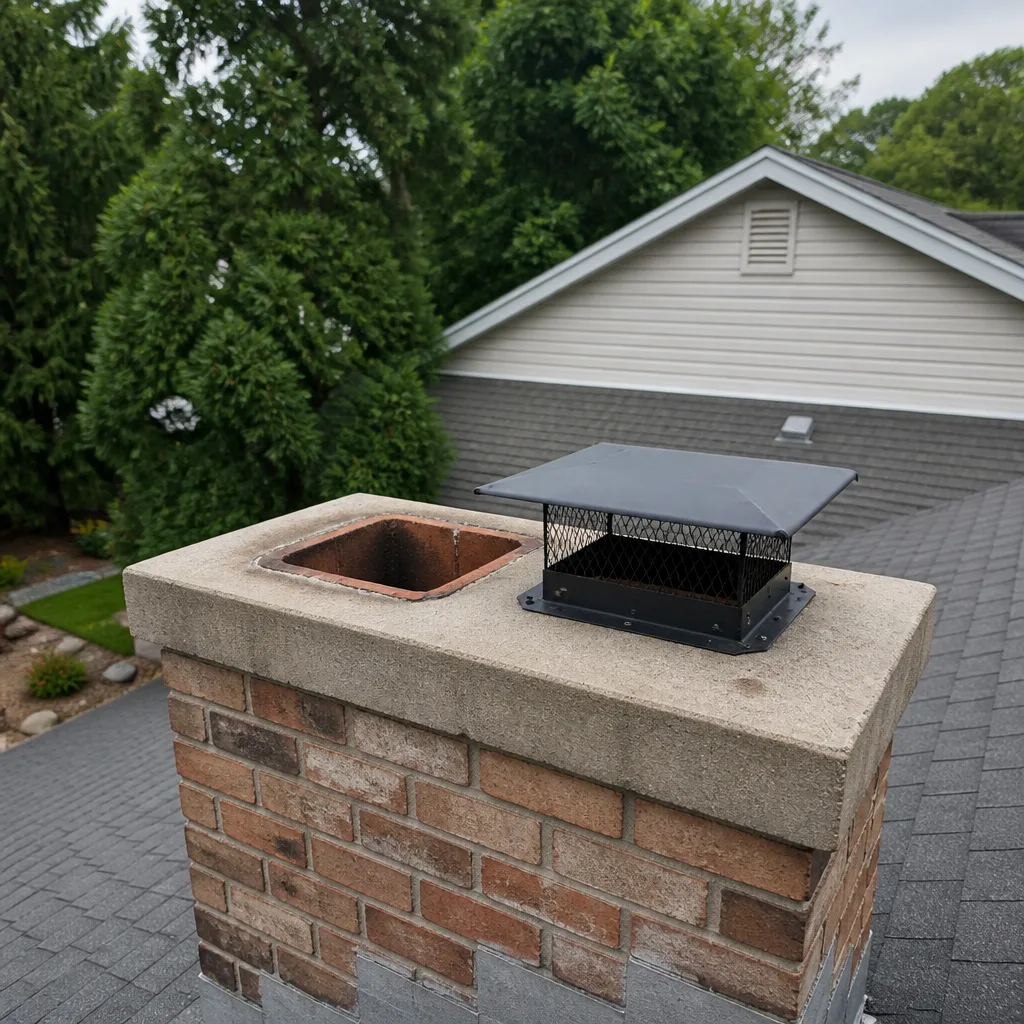 Sweep & inspection
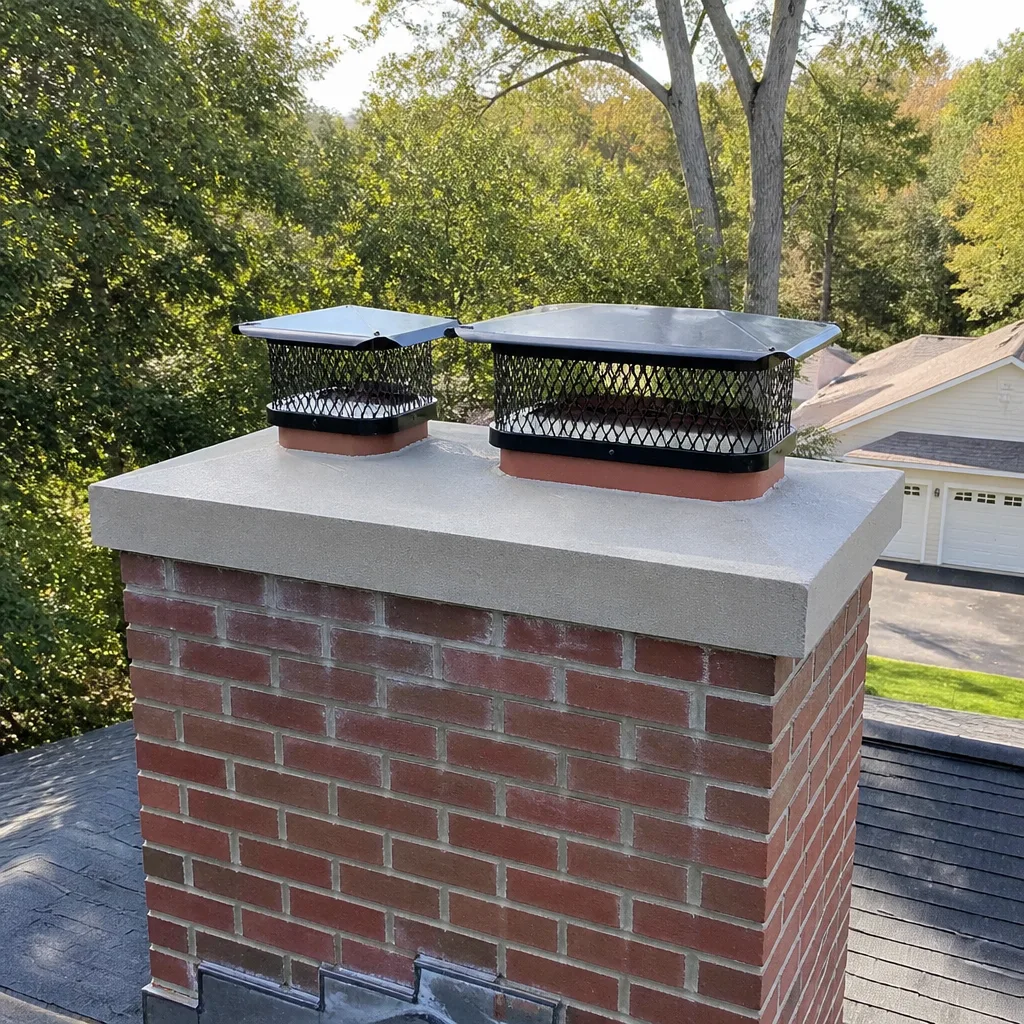 Caps & crowns
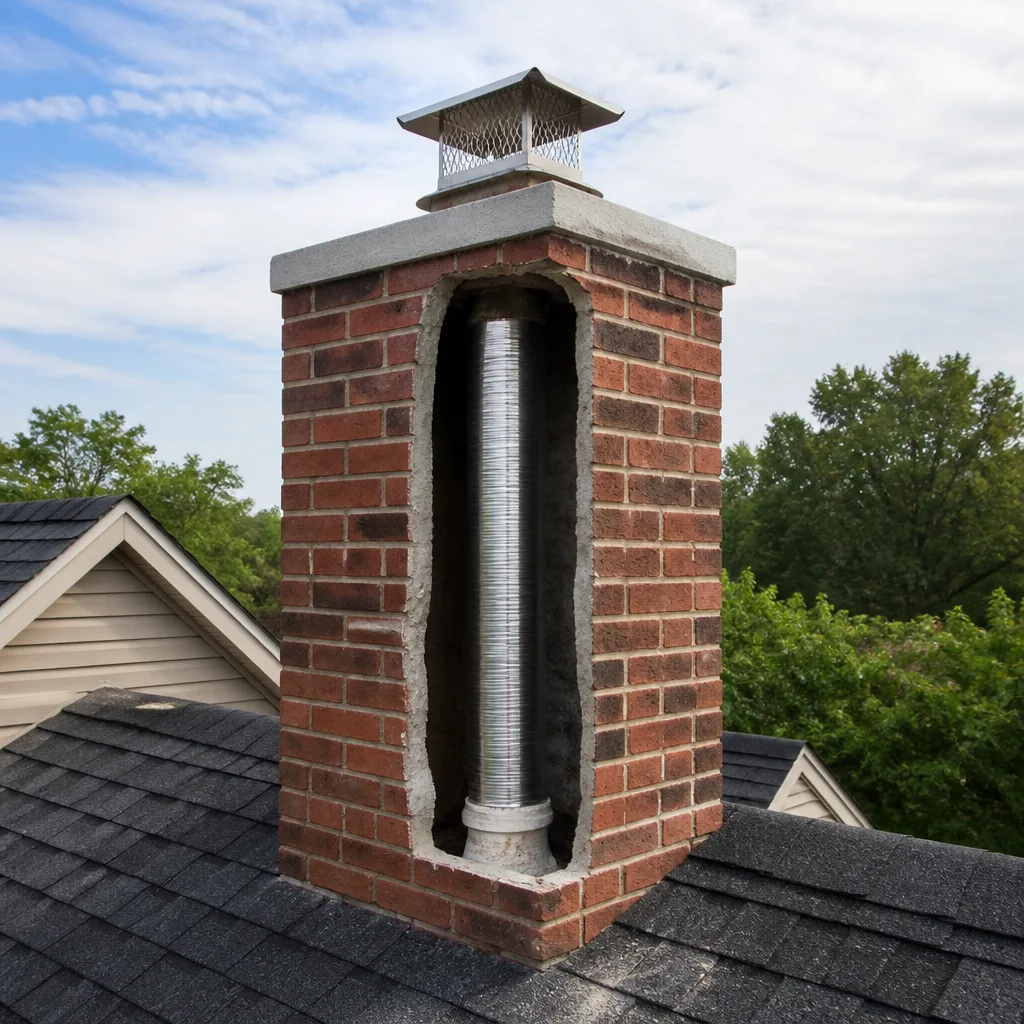 Flue relining
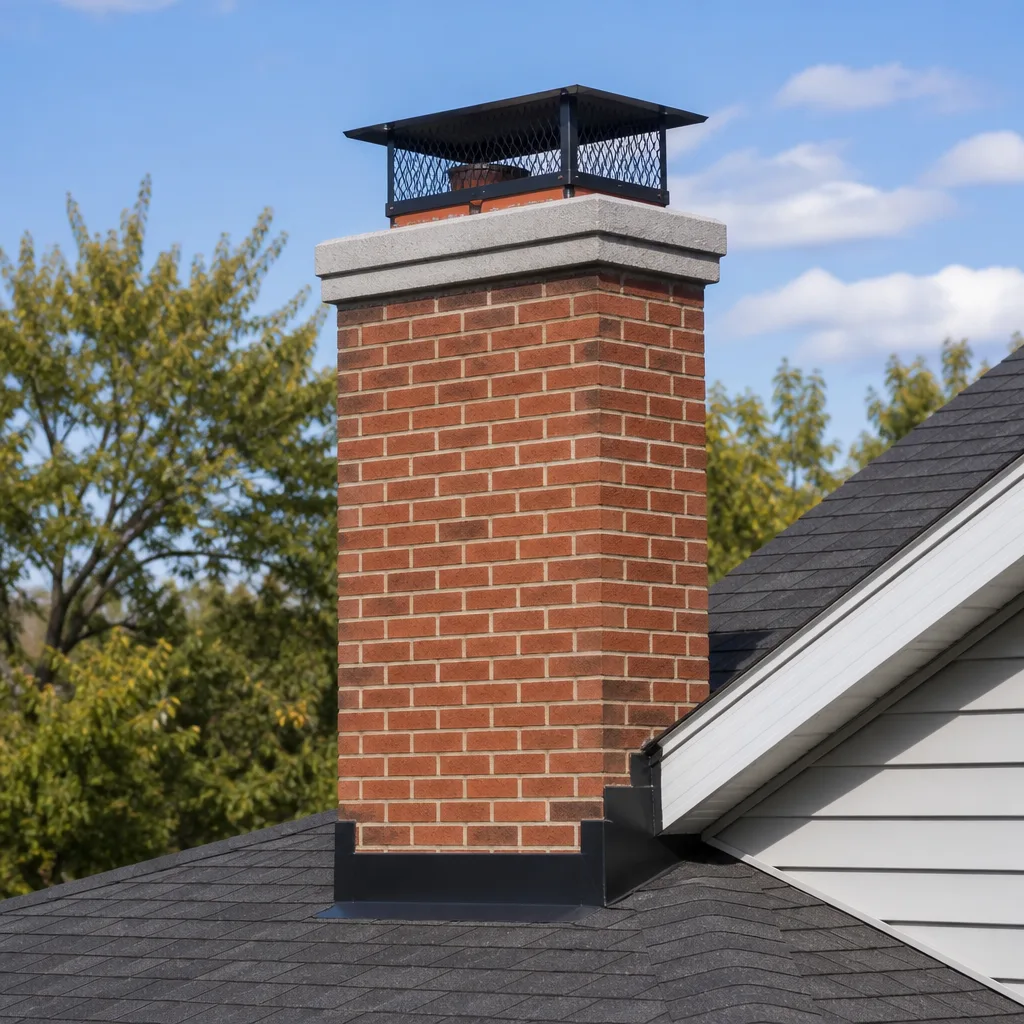 Masonry repair
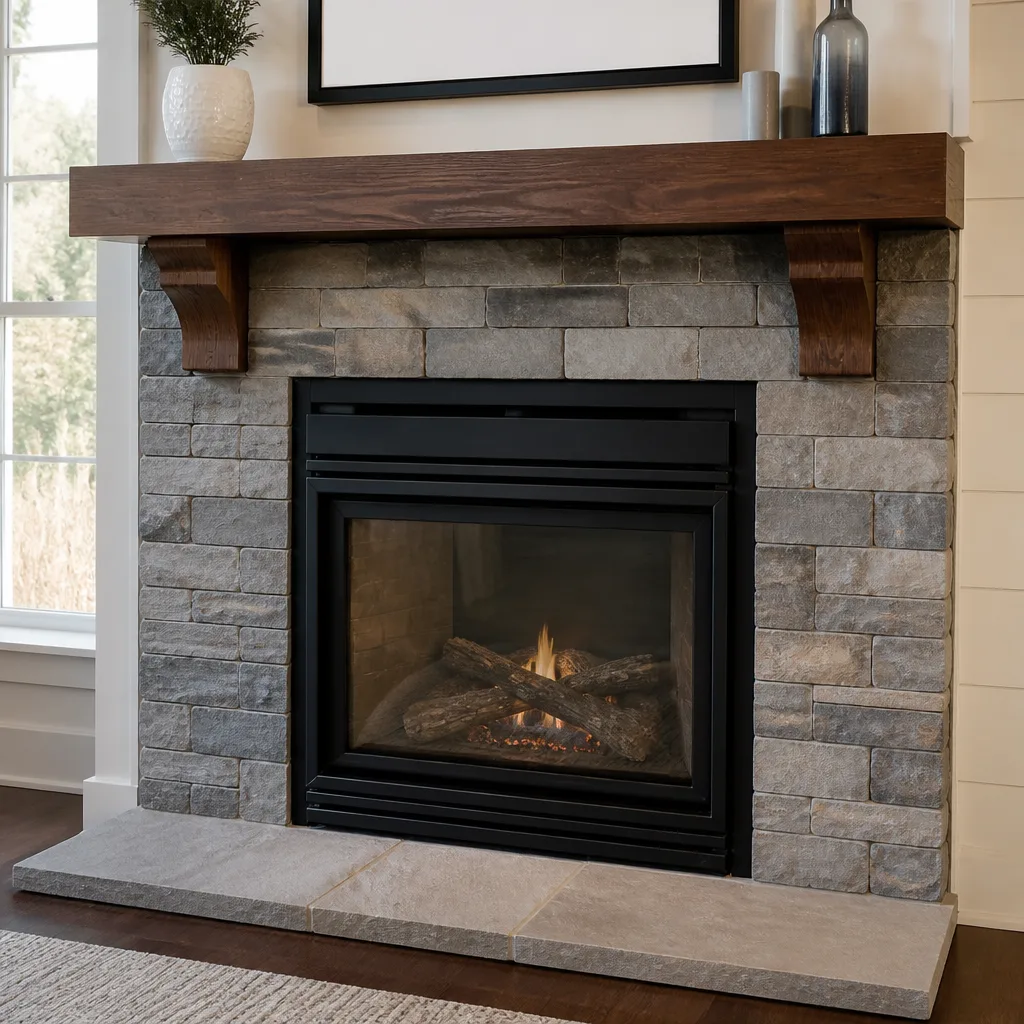 Gas fireplace service
Level 1 sweep and inspection to the NFPA 211 annual standard - flue, crown, cap, and flashing checked and photographed
Chimney sweep logs do not sweep chimneys. They loosen some creosote - which then falls where a brush and vacuum still have to collect it.
Chimney Cleaning Emergency Preparedness Guide for Near North Side Homes
A chimney fire sounds like a low-flying jet from inside the firebox. Most homeowners who hear it for the first time don’t recognize it as a fire until it’s been burning for several minutes. That delay is the difference between a contained flue event and a structure fire that spreads through the roof assembly. This guide covers the three emergencies Near North Side homeowners actually face with wood-burning fireplaces, the first-ten-minutes response for each, and the preparation steps that make serious incidents far less likely. For a full chimney sweep maintenance checklist for Near North Side homeowners, see our companion resource.
Quick Answer
Chimney emergency preparedness in Near North Side means knowing how to recognize an active flue fire, a carbon monoxide event, and a sudden draft blockage, then responding correctly in the first ten minutes. Every home with a working fireplace should have a functioning CO detector on each level, a chimney fire suppressant stick (or a backup plan), and a chimney professional’s number saved before burning season starts. After any emergency, the flue must be inspected before the next burn, even if nothing looks damaged.
Styles & brands we work with
Table of Contents
- The Three Chimney Emergencies You’ll Actually Face
- Recognizing an Active Flue Fire in the First 30 Seconds
- Carbon Monoxide Infiltration: The Silent Emergency
- Sudden Draft Blockage: When Smoke Reverses
- What to Have On Hand Before Burning Season
- The Post-Emergency Checklist
- Near North Side-Specific Emergency Context
- Pre-Season Preparation That Reduces Emergency Probability
The Three Chimney Emergencies You’ll Actually Face
When we talk to Near North Side homeowners about chimney emergencies, most assume the only risk is a dramatic chimney fire. In practice, chimney-related emergencies fall into three categories, and two of them don’t involve visible flames. Understanding all three matters because the wrong response to one can create another. A homeowner who throws water on a flue fire can crack the clay liner and trigger a carbon monoxide leak the same evening. A homeowner who ignores the early warning signs of chimney problems that every Near North Side homeowner should know can fill a living room with smoke in under two minutes.
The three categories are:
- Active flue fire: Creosote ignition inside the chimney, often audible as a roar or rumble, sometimes visible as flames or dense smoke from the chimney cap.
- Carbon monoxide infiltration: A blocked or damaged flue allows combustion gases to enter the living space. Odorless, invisible, and more common than most people realize.
- Sudden draft blockage: A nest, animal, debris, or disconnected flue component interrupts airflow, causing smoke and gases to pour back into the room.
Each of these has a specific first-ten-minutes protocol. Each also has a distinct set of warning signs in the minutes or hours before the emergency becomes obvious. Homeowners in Chimney Sweep in Near North Side territory tend to burn more frequently than suburban homeowners, which means creosote accumulates faster and seasonal preparation matters more.
Recognizing an Active Flue Fire in the First 30 Seconds
The early signs of a flue fire are loud and physical. A low rumbling sound, often compared to a freight train or a low-flying jet, coming from the chimney. Dense, dark smoke pushing out of the chimney cap. Flames visible at the chimney top. Occasionally, a strong hot smell like a wood stove running too hot, even from outside the house. The rumble is the one most people miss because fireplaces naturally make some noise on windy Near North Side evenings.
If you suspect a flue fire, the sequence matters:
- Close the fireplace damper fully if you can do so safely. This reduces oxygen flow to the fire inside the flue.
- Close the fireplace glass doors if your unit has them. This further starves the fire of air.
- Deploy a chimney fire suppressant stick following the manufacturer’s instructions. These sticks, often containing a dry chemical compound, are designed to extinguish a flue fire by displacing oxygen. They work best when deployed early.
- Call 911. A flue fire can breach the flue liner and spread into the roof structure within minutes. Fire department response is always the right call, even if the suppressant stick appears to work.
- Evacuate the house and alert adjacent neighbors if you live in an attached or semi-detached structure. We’ll cover that obligation in the Near North Side section below.
A word on chimney fire suppressant sticks: they are a valuable first-response tool, but they are not a substitute for fire department response or a post-fire inspection. They extinguish the active fire in the flue. They do not repair cracked flue tiles, damaged mortar joints, or heat-compromised liners. And they don’t address smoldering creosote that can reignite later. Think of them as the fire extinguisher in the kitchen, useful in the moment, never the end of the story.
Carbon Monoxide Infiltration: The Silent Emergency
Carbon monoxide is the chimney emergency with no drama and no visible warning. It happens when combustion gases from the fire, furnace, or water heater can’t exit through the flue and instead seep into the living space. Homes in Near North Side with older chimneys and multiple fuel-burning appliances are particularly at risk because a single blocked flue can affect several systems at once. CO is odorless and colorless, and its early symptoms mimic the flu: headache, fatigue, nausea, dizziness, confusion.
The first ten minutes matter differently here. CO events don’t announce themselves the way a flue fire does. The response protocol is:
- If your CO detector sounds, leave the house immediately. Do not open windows and try to air it out. Do not investigate the source. Get everyone outside.
- Call 911 from outside the home. Firefighters carry gas detection equipment and can verify CO levels and identify the source.
- Do not re-enter until the fire department clears the home. CO can dissipate slowly, and re-entry without verification is dangerous.
- Have the flue and all vented appliances inspected before returning to normal use. A CO event means combustion gases found a way into your home. That path must be identified and corrected.
CO detector placement is part of emergency preparedness. The National Fire Protection Association recommends a CO detector on each level of the home, including the basement, and outside each sleeping area. A detector in the hallway outside bedrooms is not optional in a home with a working fireplace. And the detector itself needs to be tested monthly and replaced according to the manufacturer’s lifespan, typically five to seven years. A dead CO detector is not a safety device.
Sudden Draft Blockage: When Smoke Reverses
A sudden draft blockage happens when something disrupts the normal upward flow of smoke and combustion gases. Common causes in Near North Side include animal nests built during the off-season, fallen tree debris landing in an uncapped flue, a dislodged flue tile, or a collapsed chimney cap. The result is immediate and unpleasant: smoke pouring back into the room instead of up the chimney.
If smoke starts rolling into the living space during a fire:
- Close the damper if possible. This reduces the opening but may not fully stop the smoke.
- Carefully extinguish the fire by closing the glass doors or using a fireplace-safe extinguishing method. Do not throw water on a fire in a masonry fireplace; the temperature shock can crack the firebox.
- Open a nearby window to create an alternate exit path for smoke and reduce indoor smoke concentration.
- Evacuate the room and close the door behind you to contain smoke damage to one area.
- Do not burn again until the flue is inspected. The blockage that caused the draft reversal is still there, and the next fire will do the same thing, only faster.
Draft reversal is also a sign that something structural has changed. Even if the blockage clears on its own, the event indicates a compromised flue. The flue is a system, not just a pipe, and a sudden change in its behavior is a diagnostic signal, not a random event. We’ve seen homeowners in older Near North Side buildings dismiss one smoky evening as “the wind,” only to discover later that a flue tile had shifted and been leaking combustion gases into a wall cavity for weeks.
What to Have On Hand Before Burning Season
Preparedness is equipment plus knowledge. The knowledge is what you’ve read so far. The equipment is a short, specific list that every Near North Side home with a working fireplace should have before the first fire of the season. None of these items are exotic or expensive, and all of them serve a purpose in the first ten minutes of an emergency.
- Functioning CO detectors on each level and outside sleeping areas. Test them monthly during burning season.
- Smoke detectors in the same room as the fireplace and in adjacent hallways. Smoke from a draft reversal can travel fast.
- A chimney fire suppressant stick stored near the fireplace where it can be reached without crossing the room. Read the instructions before you need them.
- Fireplace glass doors or a freestanding screen that can be closed to reduce oxygen flow during a fire event.
- The fire department’s non-emergency number saved in your phone for follow-up questions after an incident, and 911 for active emergencies.
- A professional chimney company’s number saved before the season begins. If you don’t have one yet, Sandstone Chimney Sweep home provides chimney sweeping, repair, and dryer vent cleaning for Near North Side homeowners.
One common misconception: a standard household fire extinguisher is useful for a fire in the room, but it is not effective for a fire inside the flue. It can’t reach the combustion chamber inside the chimney. A chimney fire suppressant stick is designed for exactly that purpose, and it’s the right tool for the job. Keep both, but understand the difference.
The Post-Emergency Checklist
After any chimney emergency, the temptation is to assume the problem is over and move on. That assumption is dangerous. The flue has been through a thermal or structural event, and the damage is often invisible from the outside. A flue fire can crack clay tiles, open mortar joints, and compromise the liner, any of which can allow the next fire’s combustion gases to leak into the home. A draft blockage event can leave debris packed in the flue or damage the cap.
Here is the post-emergency checklist in order:
- Document the event. When it happened, what you observed, what actions you took. This helps the inspector understand what the flue went through.
- Do not burn again until the chimney has been inspected by a professional. This is not a suggestion. It’s the single most important rule after any chimney emergency.
- Schedule a Level 2 inspection if the event involved a flue fire, a CO incident, or a major draft blockage. A Level 2 inspection uses video scanning to examine the interior of the flue, not just a visual check at the top and bottom.
- Have the chimney cap inspected even if the emergency was unrelated. A missing or damaged cap is an open invitation for future blockages.
- Address any repair recommendations before the next burn. A cracked liner doesn’t heal, and a loose flue tile doesn’t re-seat itself. Schedule the repair, and get it done.
We’ve had Near North Side customers ask if they can “just burn smaller fires” after a flue fire to avoid repairs. The answer is no. The damage from a flue fire is structural, and using a compromised flue, even at low intensity, is how carbon monoxide finds its way into bedrooms. Chimney Repair in Near North Side is not optional after an emergency; it’s the step that makes the emergency a one-time event instead of a pattern.
Near North Side-Specific Emergency Context
Near North Side has a housing stock and density pattern that changes how chimney emergencies play out. Many homes are attached row houses, semi-detached buildings, or closely spaced single-family homes. A chimney fire in one unit can spread through shared roof structures or party walls to adjacent homes. This isn’t a rare scenario; fire spread between attached structures is a well-documented pattern in dense urban neighborhoods.
What this means practically: if you have a chimney fire, alerting your neighbors is not a courtesy. It’s part of the emergency response. A fire that begins in your flue can breach into the roof assembly and travel laterally before it becomes visible from the street. Your neighbors have a right to know that a fire is active in your chimney so they can make decisions about their own homes. The same goes for large smoke events from draft blockages on attached properties.
There’s also a code consideration in Near North Side. Older masonry chimneys may predate modern liner requirements, and some homes have flues serving multiple fireplaces or appliances through a single chase. These shared-flue configurations mean a chimney emergency in one unit can affect another. If you live in an attached or semi-detached building, know whether your flue is shared, and treat any chimney event as a building-wide notification event. The fire department will make this determination quickly if they respond, but notifying neighbors while the fire is active is the right call.
Pre-Season Preparation That Reduces Emergency Probability
Most chimney emergencies in Near North Side homes are predictable in their causes and preventable with preparation. Flue fires come from accumulated creosote. Draft blockages come from animal nests, debris, and damaged caps. CO events come from blocked or damaged flues. All three have a pre-season prophylaxis: a professional chimney inspection and cleaning before the first fire of the season.
Here’s the pre-season preparation sequence we recommend:
- Schedule an inspection and sweep in late summer or early fall. Creosote from the previous season should be removed before it hardens into a glaze that’s harder to remove and more combustible.
- Ensure the chimney cap is in good condition and secure. A good cap keeps out rain, debris, and nesting animals. We source caps and other components from manufacturers like Olympia Chimney and Famco because they build parts that fit and hold up in Midwestern weather.
- Monitor creosote stage throughout the burning season. First-degree creosote is flaky and easy to remove. Second-degree is tar-like and harder. Third-degree is glazed and highly combustible. If you’re burning unseasoned wood or running low-temperature fires regularly, you’re building creosote faster.
- Burn only seasoned hardwood with a moisture content below 20%. Wet or green wood burns cooler and produces more creosote.
- Address any fireplace performance issues immediately. A fireplace that smokes, drafts poorly, or produces unusual odors is signaling a flue problem. Ignoring the signal increases emergency risk.
Brands like DuraFlex and Copperfield produce liner systems that are specified for chimney restoration work because they’re engineered for the specific demands of flue service. When repairs are needed, the materials matter. A liner that fails three years after installation means another emergency risk cycle. A liner that performs for decades removes that risk from the equation. Dryer Vent Cleaning in Near North Side addresses a parallel fire hazard, lint-clogged dryer vents, and many homeowners combine the two services to reduce indoor fire risk across the board.
Common Mistakes to Avoid
- Throwing water on a flue fire. The thermal shock can crack the flue liner and firebox, creating the conditions for a carbon monoxide leak. Use a chimney fire suppressant stick and call 911.
- Ignoring a CO detector alert. A CO alarm is not a false alarm in a home with a wood-burning fireplace. Treat every alert as an emergency until the fire department verifies otherwise.
- Assuming a survived flue fire means no damage. Flue fires regularly crack liners and open mortar joints invisibly. The only way to confirm the flue is safe is a professional inspection before the next burn.
- Burning the first fire of the season without an inspection. In Near North Side, animals nest in chimneys during the off-season, and debris accumulates. The first fire of the season is the most likely to expose a blockage.
- Using a fireplace as a primary heat source without regular maintenance. Heavy use accelerates creosote accumulation. A fireplace used daily needs more frequent cleaning than one used occasionally.
- Overlooking the chimney cap. A missing or damaged cap is an open invitation for animal entry and debris blockage, two direct causes of draft reversal and CO events.
- Waiting to call a professional until emergency level damage is confirmed. Chimney problems compound. A small crack becomes a structural issue, and a modest creosote buildup becomes a flue fire. Early intervention is always less expensive than emergency response.
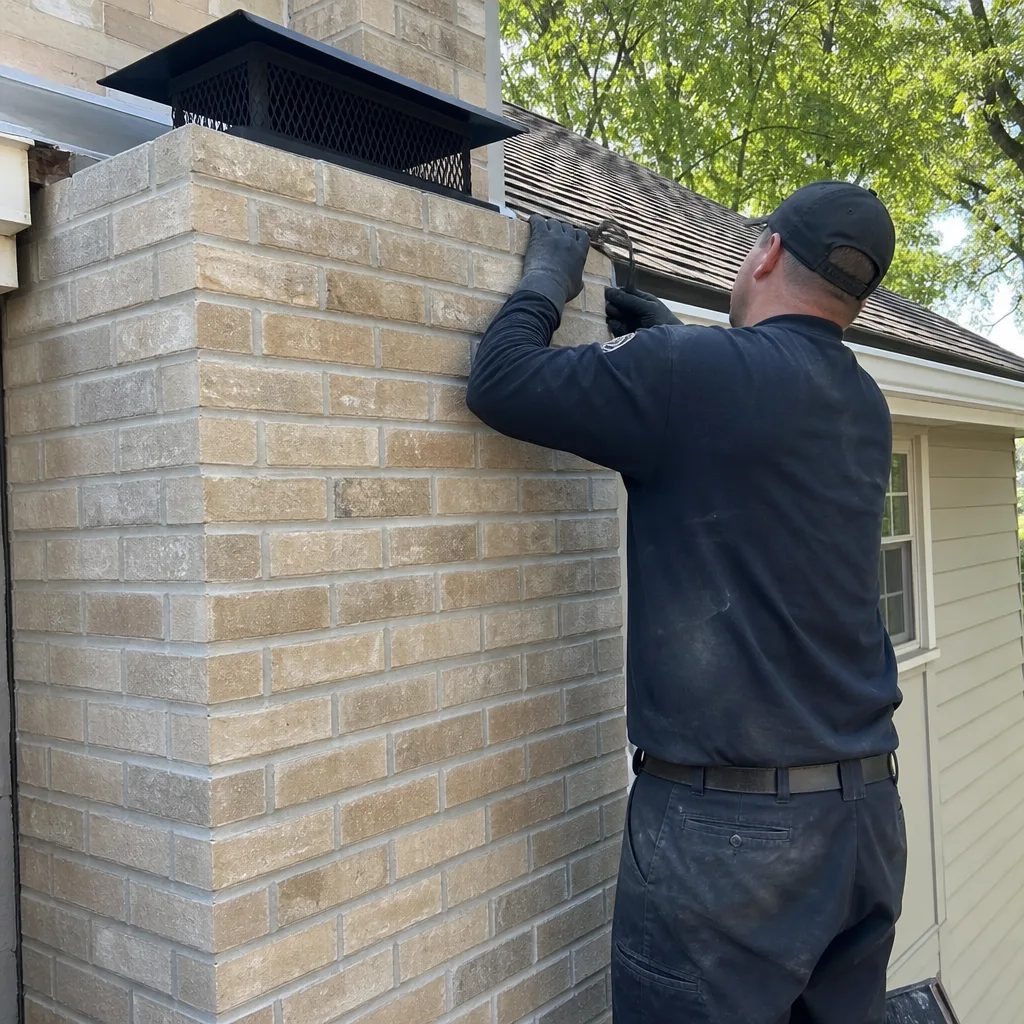
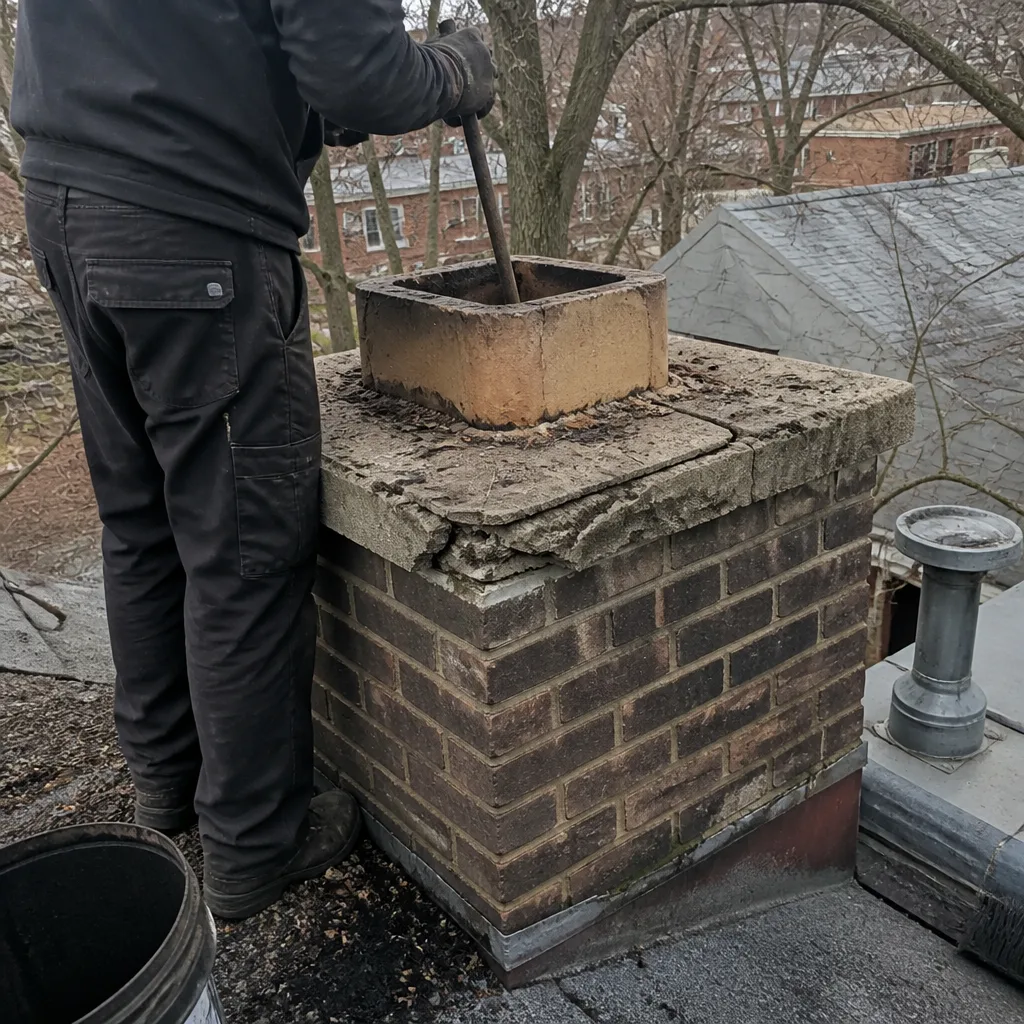
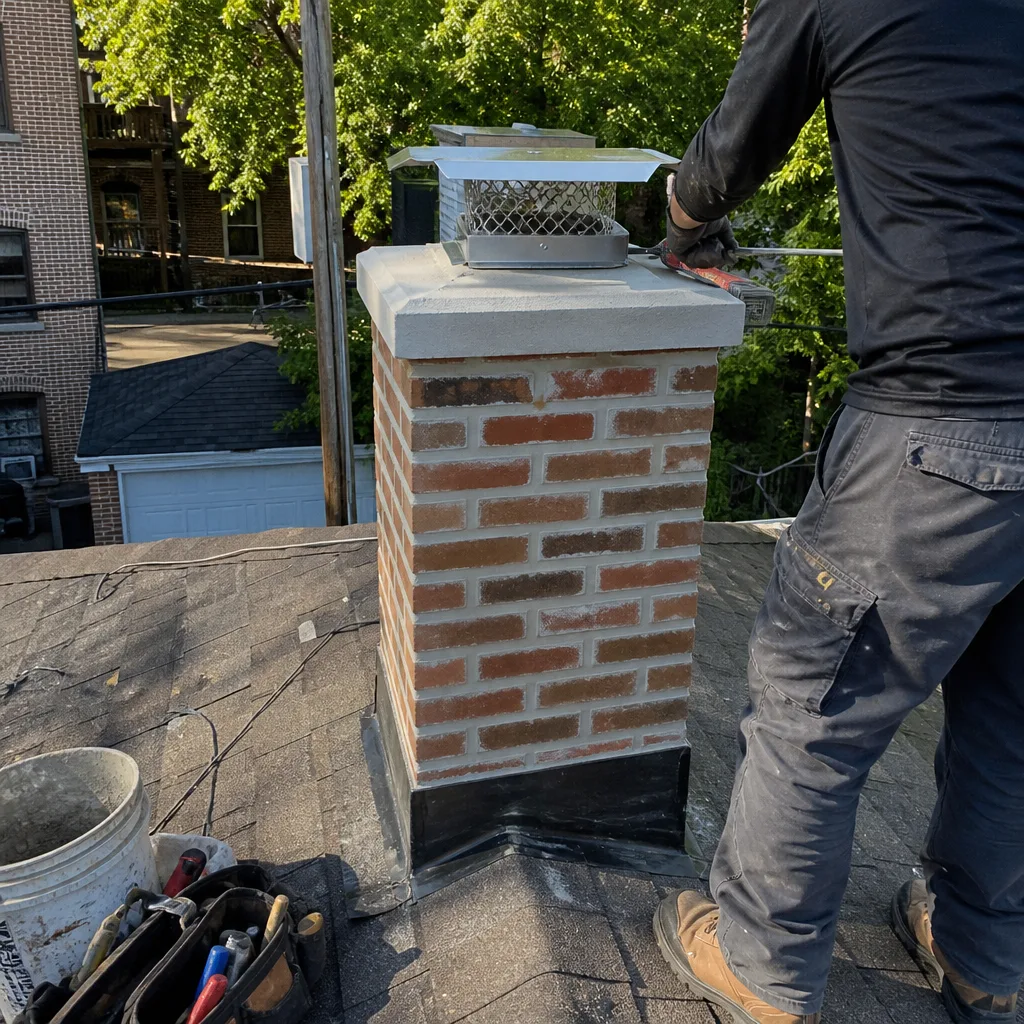
See the difference
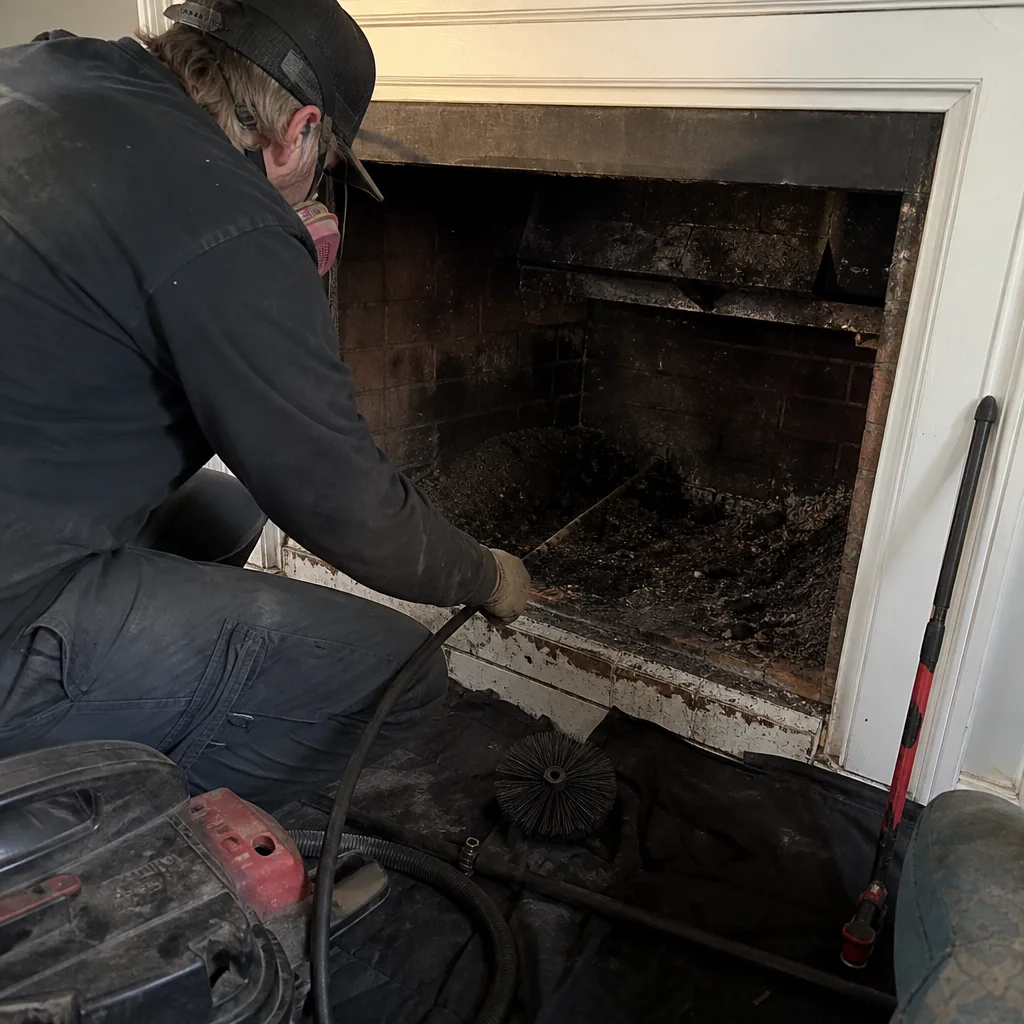 Before
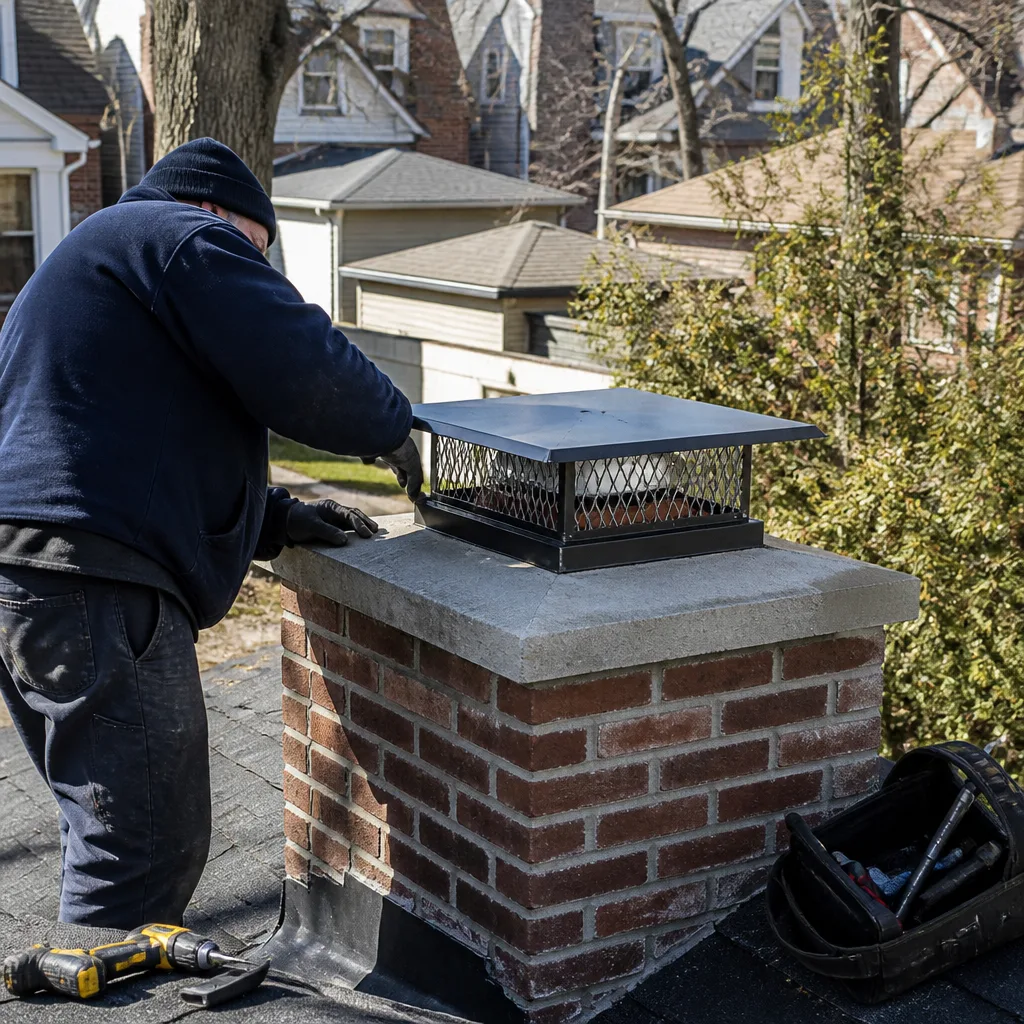 After
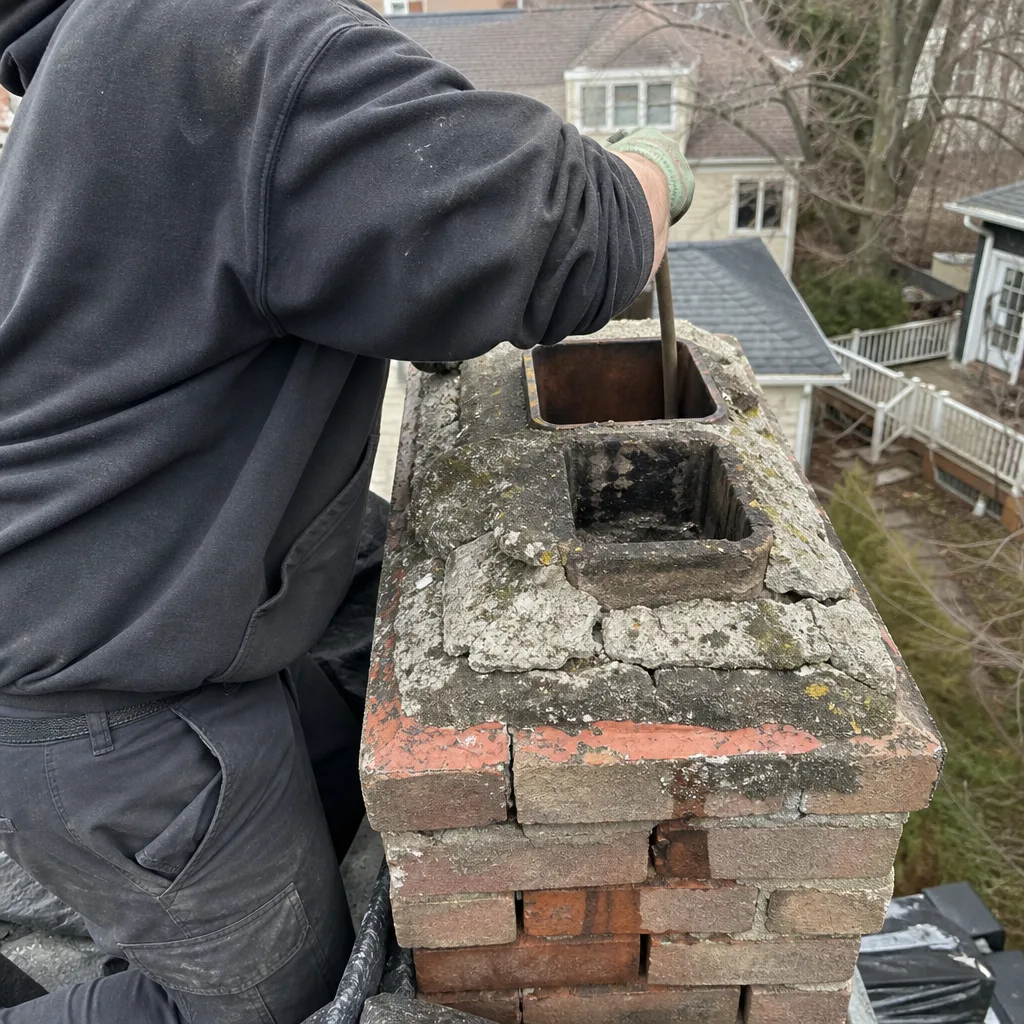 Before
 After
 Before
 After
When to Call a Professional
Call a chimney professional after any suspected flue fire, any carbon monoxide event, any significant draft reversal, or any visible chimney damage. Also call if you’re unsure whether your chimney is safe to burn. These aren’t judgment calls; they’re the difference between prevention and emergency. If you’ve experienced any of the events described in this guide, or if you simply haven’t had your flue inspected in more than a year, Sandstone Chimney Sweep offers free estimates in Near North Side. We inspect, we diagnose, and we repair with specification-grade materials from brands like DuraFlex and HeatShield. Call (833) 589-7835 to schedule.
Frequently Asked Questions
A chimney fire typically sounds like a low rumbling or roaring, often compared to a freight train or a low-flying jet, coming from inside the chimney. The sound is distinct from normal fireplace noise and is often accompanied by dense smoke or flames from the chimney cap. If you hear that rumble and see heavy smoke, close the damper and call 911 immediately.
The National Fire Protection Association recommends a chimney inspection at least once a year, and a sweeping whenever creosote accumulation reaches 1/8 inch or more. For Near North Side homeowners who burn regularly during the winter, an annual sweep before the season starts is the baseline. Homes that burn daily or use unseasoned wood may need a mid-season sweep as well.
No, a standard household fire extinguisher cannot reach a fire inside the flue. It’s designed for surface fires in the room. A chimney fire suppressant stick, which is deployed into the firebox and releases a chemical that rises into the flue to displace oxygen, is the right tool for a chimney fire. It’s a first-response measure, not a substitute for fire department response and post-fire inspection.
Signs of a blocked chimney include smoke backing up into the room, a strong smoky odor when the fireplace isn’t in use, difficulty starting or maintaining a fire, and visible debris or animal activity near the chimney cap. In Near North Side, where chimneys sit unused for months during warmer weather, animal nests are a common cause of blockage.
Yes. Carbon monoxide events don’t happen only during heavy fireplace use. A flue blockage, a cracked liner, or a downdraft can push CO into the living space during any burn, even a short one. A CO detector on each level and outside sleeping areas is the minimum for any home with a wood-burning fireplace, regardless of how often it’s used.
Chimney inspection costs in Near North Side vary depending on the inspection level and the condition of the flue. A basic Level 1 inspection is typically the most affordable option and is appropriate for homes with no changes to the system. A Level 2 inspection, which includes video scanning and is required after a chimney fire or major system change, costs more. Call (833) 589-7835 for an exact quote, estimates are free.
The Bottom Line
Chimney emergencies in Near North Side are predictable in their causes and manageable in their response when homeowners know what to do in the first ten minutes. Recognize the three emergency types, stock the right equipment, and follow the response protocols without hesitation. After any incident, the flue must be inspected before the next burn, regardless of what’s visible. The best preparation is annual inspection and cleaning before the season starts, with repairs handled by a company that uses specification-grade materials and provides single-company accountability from diagnosis through repair. Explore more guides & resources on chimney safety and maintenance. That’s the difference between a scare and a disaster.
Written by the team at Sandstone Chimney Sweep, serving Near North Side since 2017.