
Last updated October 30, 2026
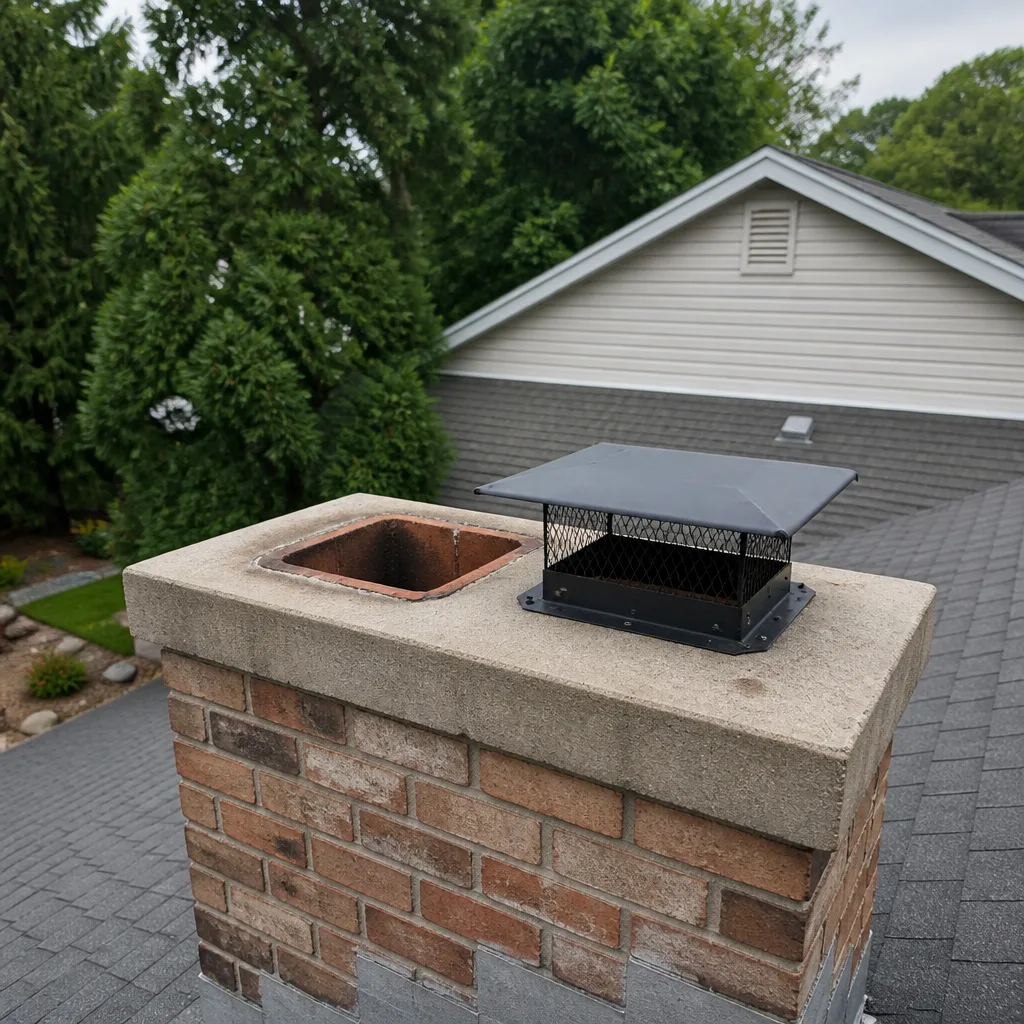 Sweep & inspection
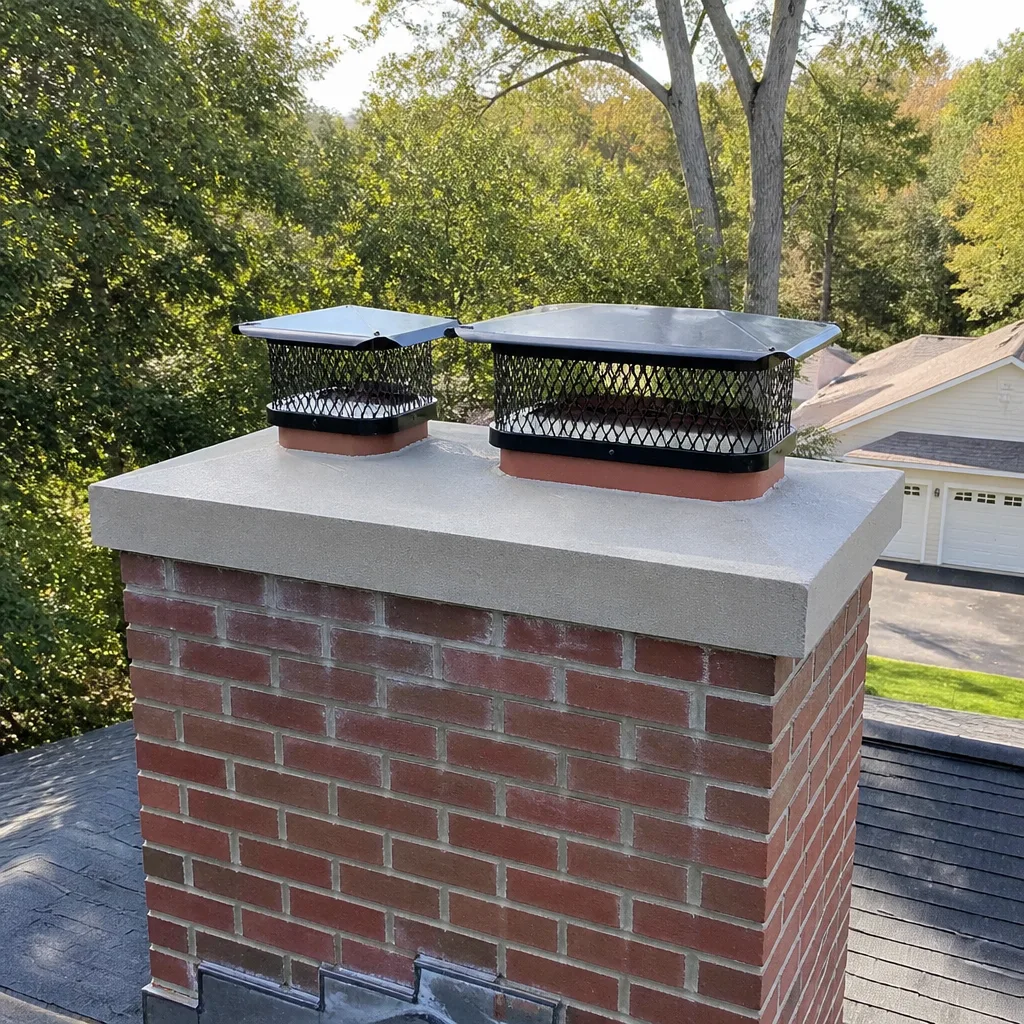 Caps & crowns
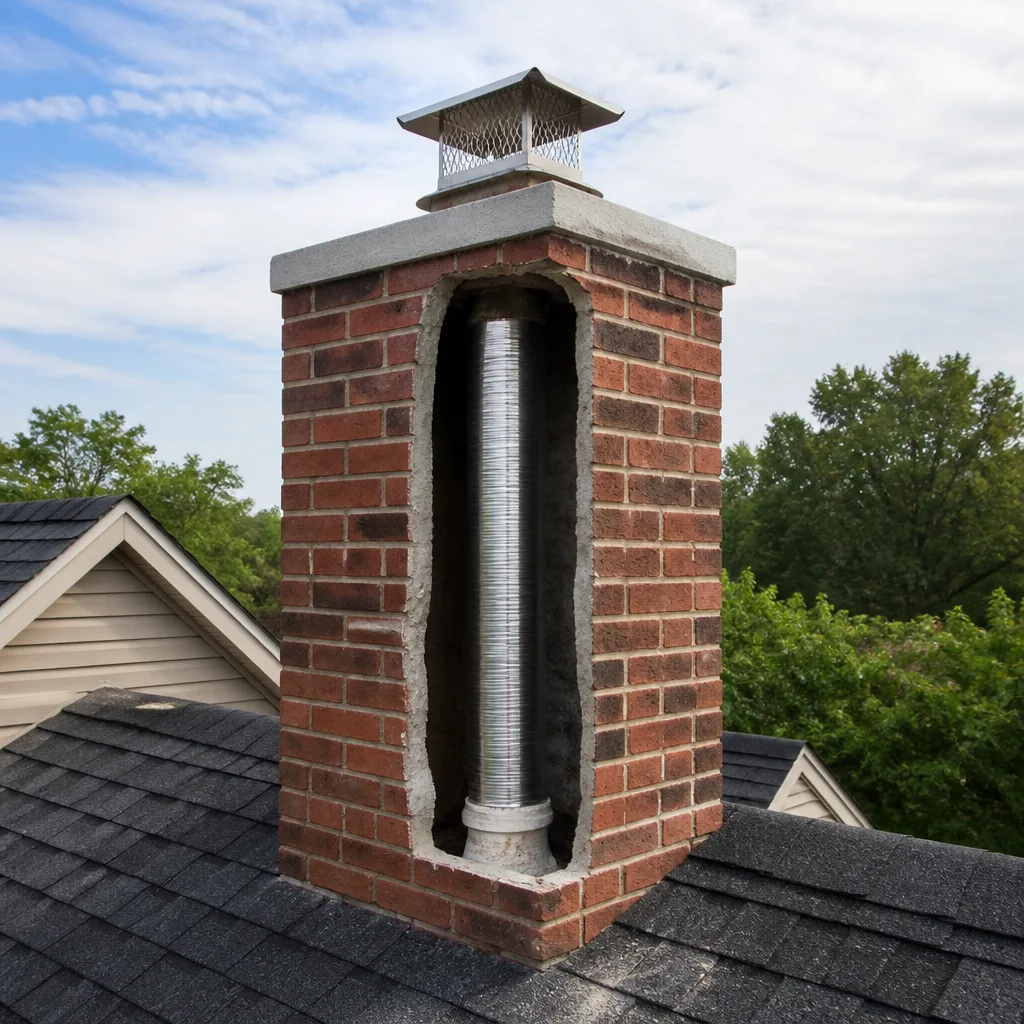 Flue relining
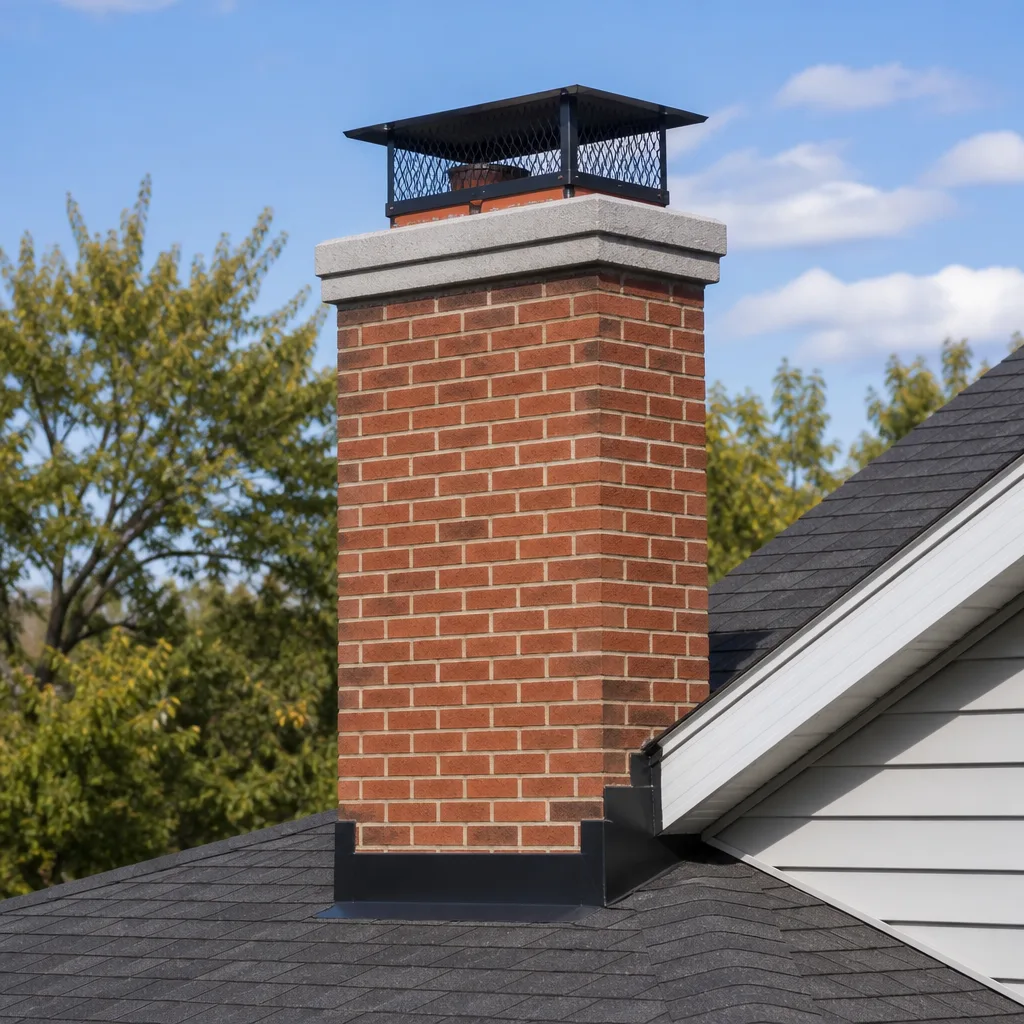 Masonry repair
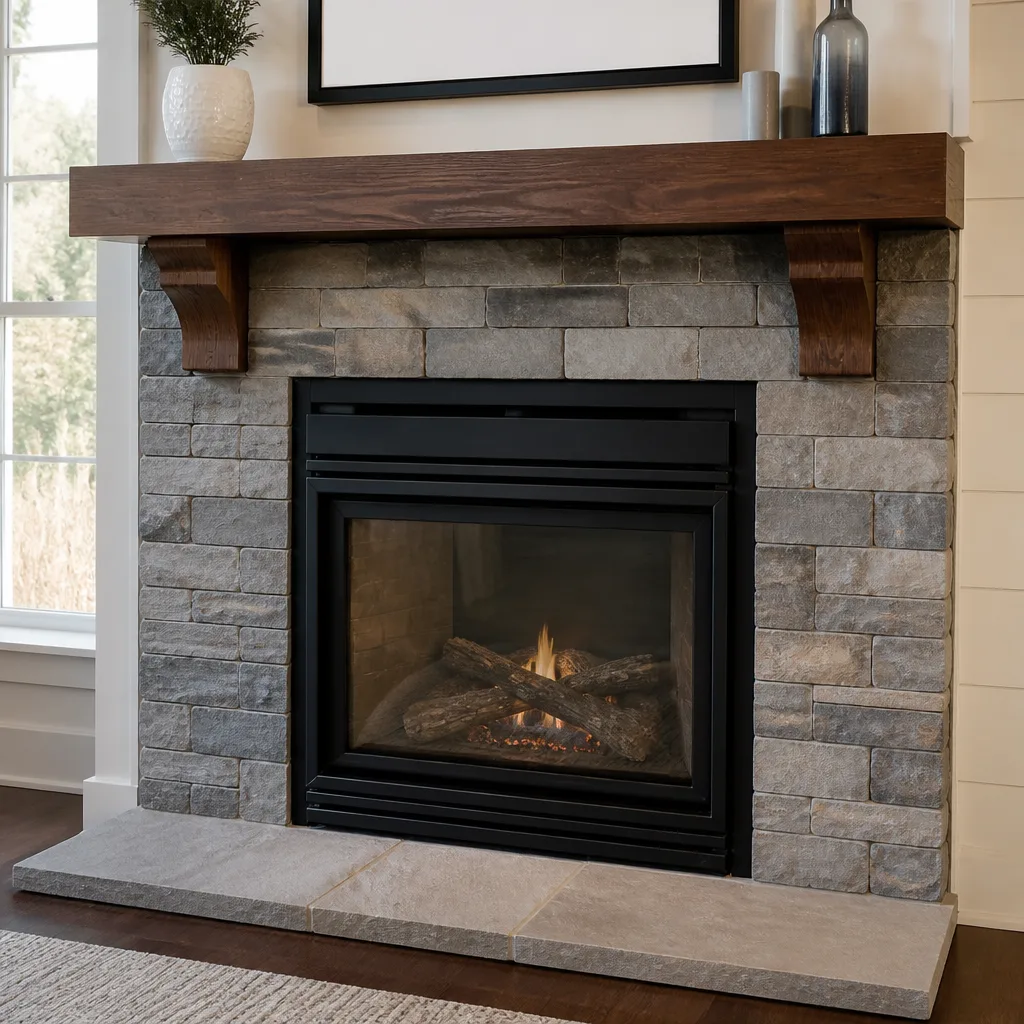 Gas fireplace service
Level 1 sweep and inspection to the NFPA 211 annual standard - flue, crown, cap, and flashing checked and photographed
Chimney sweep logs do not sweep chimneys. They loosen some creosote - which then falls where a brush and vacuum still have to collect it.
DIY vs Professional Chimney Cleaning: The Near North Side Homeowner’s Decision Guide
DIY chimney brush kits work exactly as advertised. They clean the flue. What they can’t do is tell you whether the liner they just cleaned is cracked, offset, or undersized for your appliance. And on the Near North Side, where rowhouses and vintage walk-ups crowd every block, that distinction matters more than most homeowners realize. This guide walks through what a store-bought chimney cleaning actually accomplishes, what it misses, and how to decide which approach makes sense for your fireplace, your roofline, and your insurance policy. For more guides & resources, visit our blog.
Quick Answer
For most Near North Side homeowners, professional chimney cleaning is the better choice because it pairs mechanical creosote removal with a code-informed inspection of the liner, smoke chamber, damper, cap, and exterior masonry. If you’re unsure where to start, see our guide on How to Hire a Chimney Cleaning Contractor in Near North Side: A Step-by-Step Guide. DIY cleaning can remove first-degree creosote from an accessible, straight flue, but it cannot document chimney condition, catch early liner failure, or satisfy an insurer looking for records after a chimney fire. If your goal is a clean flue and a firebox you can safely use all winter, hire the sweep. If you’re doing light mid-season maintenance between professional visits, DIY ash removal and firebox inspection is reasonable and safe.
Styles & brands we work with
Table of Contents
- What DIY Chimney Cleaning Actually Accomplishes
- Where DIY Cleaning Stops Being Adequate
- The Inspection Component DIY Eliminates
- Why Near North Side Rooflines Make DIY Harder
- DIY Cleaning and Your Insurance After a Chimney Fire
- The One Scenario Where DIY Maintenance Makes Sense
- What Each Approach Costs on the Near North Side
- How to Choose: A Decision Framework
What DIY Chimney Cleaning Actually Accomplishes
Let’s start with credit where credit is due. A chimney brush kit from a hardware store does what its package says: it runs a wire or poly brush through the flue and knocks loose the creosote that has accumulated on the walls. If your chimney is a straight, vertical run with no offset, and if the creosote hasn’t progressed past first-degree, a homeowner with patience and a decent brush can remove visible buildup. That’s a real thing. We’re not going to pretend it isn’t.
First-degree creosote is the flaky, sooty deposit that forms when wood burns incompletely and the smoke cools too quickly on its way up. It’s loose. It brushes off. If that’s the only condition you’re dealing with, a DIY cleaning will reduce the fuel load in your flue and lower your chimney fire risk for the season ahead. For a modest Chicago rowhouse with a 15-foot interior chase and a straight run from firebox to cap, that’s an achievable Saturday afternoon project, provided you can get on the roof safely and your cap comes off without a fight.
But the phrase “provided that” is doing heavy lifting. And it’s the conditions hidden inside that phrase that separate what DIY cleaning is designed to do from what your chimney actually needs. Here is the honest breakdown:
- What DIY cleaning removes: loose, first-degree creosote on accessible, straight flue walls.
- What DIY cleaning cannot remove: glazed, third-degree creosote, which is baked-on and requires chemical treatment plus mechanical scraping with professional rotary tools.
- What DIY cleaning cannot assess: whether the liner behind that creosote is cracked, pitted, offset, or spalling.
- What DIY cleaning cannot document: a professional inspection record showing the flue was clean and sound on a given date.
In our experience on the Near North Side, homeowners who burn regularly with wood they buy from a gas station bundle often produce second-degree creosote within a single season. That’s the tar-like deposit that hardens on flue walls and does not come off with a hardware-store brush. If your fires burn cool or you close the damper too early, you’re likely creating conditions a DIY kit can’t touch.
Where DIY Cleaning Stops Being Adequate
The practical line is not hard to find. DIY cleaning is adequate when three things are true at once: your flue is straight, your buildup is first-degree, and your chimney was professionally inspected within the last 12 months. Once any of those conditions fails, you’ve left the territory where a brush kit is the right tool.
Glazed creosote is the obvious line. That shiny, black, tar-like coating is the residue of low-temperature, high-moisture fires. It is concentrated fuel. It ignites at lower temperatures than first-degree creosote, burns hotter, and is nearly impossible to remove without chemical treatment, rotary loops, and time. No homeowner with a wire brush is removing glazed creosote from a 6-inch clay tile liner. Anyone who tells you otherwise has never tried.
Offsets in the flue are a second line. Many Near North Side chimneys were built with a slight jog to route around a ceiling joist or to accommodate a rowhouse party wall. That offset is exactly where creosote accumulates fastest, because smoke slows and cools as it negotiates the turn. It’s also exactly where a do-it-yourself brush stops making contact. You’ll clean the straight sections and leave the deposit at the bend. The chimney will look fine from the top and the firebox. The fuel load remains where it’s most likely to ignite.
A third line is liner condition. If you don’t know what’s inside your flue, you don’t know whether brushing it is safe. Brushing a cracked clay tile liner can dislodge pieces and create blockages. Brushing a deteriorated mortar joint can open a path for embers to reach combustible framing. The brush did its job, and the chimney is now more dangerous than it was before you cleaned it.
That’s the quiet failure mode of DIY chimney work. It’s not that the tool doesn’t work. It’s that the tool works on a system whose condition you haven’t verified.
The Inspection Component DIY Eliminates
When we sweep a chimney on the Near North Side, the cleaning itself takes between 45 and 90 minutes. The inspection is where the value of the visit actually sits. That’s not a sales pitch. It’s the anatomy of the service.
A professional sweep in Chicago is looking at more than flue wall buildup. The National Fire Protection Association Standard 211, which Chicago’s building code references, requires a Level 1 inspection with every chimney cleaning. That inspection includes:
- The smoke chamber. This is the area directly above the firebox where smoke compresses before entering the flue. It’s often parged with a rough mortar that catches creosote and conceals cracks. A camera scope shows what the eye can’t.
- The flue liner. We’re looking for cracks, offset joints, missing mortar, and signs of past chimney fire. A cracked liner is a ventilation problem that brushing will not solve.
- The damper. Does it seat completely? Does it move freely? A damper that won’t close is a heat-loss leak and a draft reversal point.
- The chimney cap and crown. Is the cap intact? Is the crown cracked? Water has a way of finding cracked crowns, and freeze-thaw cycles in Chicago winters expand those cracks every season.
- The exterior masonry. From the roof, a sweep can see spalling brick, failed flashing, and pointing that needs attention before water works its way inside.
None of these items requires a brush. All of them determine whether your chimney is safe to use. A homeowner who climbs on the roof to run a brush through the flue has none of this information. They cannot see inside a smoke chamber without a camera. They cannot evaluate a damper seat from the top of the flue. They will not know whether the liner behind the creosote is cracked. The cleaning happens. The diagnosis doesn’t. And the diagnosis is the part that keeps a chimney fire from starting in February.
This is why Sandstone Chimney Sweep treats sweeping and repair as one continuous service, not two separate jobs. The same technician who sweeps the flue is the one who scopes the liner and evaluates the masonry. If a crack shows up on camera, the repair conversation happens that day, with that evidence in front of the customer. Chimney Sweep in Near North Side service includes that inspection because a sweep without one is just floor cleaning for a room you can’t see.
Why Near North Side Rooflines Make DIY Harder
The Near North Side is not a suburban subdivision with a 4/12-pitch ranch and a comfortable ladder. We service chimneys on vintage rowhouses, three-flats, and converted loft buildings where the roofline is often steep, the chase is tall, and the access is from a third-story roof deck with a 30-foot drop to the sidewalk. That changes the DIY equation in three specific ways.
First, roof access. Many Near North Side rowhouses have flat roofs with parapet walls, which sounds easy until you factor in the ladder to reach the parapet and the walk across a rubber membrane roof that you’d rather not puncture. Homes with pitched roofs are often too steep to stand on safely without roof brackets and a harness. The hardware store sells neither.
Second, flue height. A two-story Chicago rowhouse can have a flue that runs 25 to 35 feet from the firebox to the cap. A standard DIY brush kit includes a handful of fiberglass rods. The kit doesn’t include the muscle memory to guide a brush down a 30-foot flue without snagging on a mortar joint or dropping a rod. Working from the top means lowering yourself to the cap and staying balanced while you feed rods. Working from the bottom means running a brush up through the firebox, which pushes creosote and soot into the room regardless of how careful you are with the drop cloth.
Third, the weather window. Cleaning a chimney from the roof in late October on the Near North Side means cold hands, possible frost on the roofing membrane, and early sunset. Professional sweeps schedule around the weather because we have the gear for it. A homeowner with a free Saturday and a hardware-store kit is at the mercy of whatever the forecast gives them. That’s not a recipe for a careful, thorough job.
The practical takeaway for Near North Side homeowners is that the DIY chimney-cleaning calculus assumes a suburban split-level with an easy roof. Most of our service area doesn’t look like that. The homes here are older, taller, and closer together. They were built in a time when chimney sweeping was a trade, not a weekend activity, and the rooflines still reflect that.
DIY Cleaning and Your Insurance After a Chimney Fire
Let’s talk about the part no hardware-store kit mentions: what happens after a fire.
Homeowners insurance covers chimney fires as a sudden and unexpected peril. But an adjuster investigating a chimney fire will ask a question before writing a check: when was the last time this chimney was cleaned and inspected, and who did it? If the answer is “I cleaned it myself with a brush kit from Menards,” the claim gets complicated, fast.
Insurers look for evidence of reasonable maintenance. A professional chimney sweep produces a dated invoice with a service description and, if the company does it right, a camera inspection report showing the flue condition on that date. That’s documentation of reasonable care. A DIY cleaning produces no third-party record. It’s your word against the fire. In a close case involving a deteriorated liner or a concealed smoke chamber issue, the lack of a professional inspection record can move an adjuster toward denial or reduced settlement.
That’s not a hypothetical. The Insurance Information Institute and fire investigation literature both point to failure-to-maintain as a common basis for claim disputes in chimney fire cases. If the last professional inspection was five years ago, the insurer can argue the fire resulted from neglected maintenance, not sudden occurrence. Your premium, your coverage, and your claim payout are all on the table.
The same logic applies to code compliance. Chicago’s building code incorporates NFPA 211, which requires annual inspection and cleaning as needed. Burning wood in a chimney that hasn’t been professionally inspected in years is a code gap. After a fire, that gap becomes the insurer’s argument. A professional annual sweep closes it. A DIY brush kit does not.
The One Scenario Where DIY Maintenance Makes Sense
So far this guide has been hard on the DIY case, and fairly so. The brush kit is not the right tool for the job on most Near North Side chimneys. But there is a genuine place for homeowner maintenance, and it’s between professional cleanings, not instead of them.
Mid-season firebox maintenance is safe, sensible, and within a homeowner’s ability. Here’s what that includes:
- Ash removal. Empty the firebox when the ash bed exceeds about an inch. Use a metal ash bucket, not the kitchen trash can. Dispose of ashes only after they’ve thoroughly cooled, which means days, not hours. A surprising number of house fires start in a trash can where someone dumped “cool” embers.
- Glass door cleaning. Use a fireplace glass cleaner and non-abrasive cloth. Don’t scrape with razor blades; you’ll score the glass and create a fracture point when it heats.
- Firebrick inspection. Look for cracked, spalling, or missing firebrick in the firebox. A cracked firebrick isn’t an emergency, but it should be on the list for your next professional visit.
- Gasket check. If you have a wood stove insert, check the door gasket for wear. A worn gasket lets uncontrolled air into the firebox, which burns hotter than the stove is designed for.
That’s the full scope of what we’d recommend a homeowner do between professional visits. All of it takes place inside the firebox, at floor level, with no ladders and no roof access. None of it requires a brush kit, rods, or a chimney cap removal. And none of it replaces the annual professional sweep. It supplements it.
If you’re cleaning your own firebox monthly and scheduling a professional sweep annually, you’re doing everything the system asks of you. If your plan is to skip the professional sweep and run a brush kit every fall, you’re leaving the gaps this guide has already mapped.
What Each Approach Costs on the Near North Side
Let’s put numbers on the table, because the DIY case usually starts and ends with the price difference.
A chimney brush kit with rods, a brush, and basic instructions runs $50 to $120 depending on flue diameter and whether you’re buying poly or wire. Add the ladder you probably already own, the tarp and drop cloths, and the Saturday afternoon. That’s the full DIY cost: about a hundred dollars in materials and half a day of your time.
A professional chimney sweep on the Near North Side typically runs $180 to $350 for a standard cleaning with a Level 1 inspection, depending on flue height, access, and whether you’re burning wood or gas. For a detailed breakdown of what drives these numbers, see our Chimney Cleaning Cost Breakdown: The Near North Side Homeowner’s Reference for 2026. Add another $100 to $200 if the flue has heavy glaze and requires chemical treatment. That’s the all-in cost: a couple hundred dollars for a clean flue, a camera-inspected liner, a documented maintenance record, and a professional eye on the masonry.
Here’s the comparison in table form:
| Factor | DIY Brush Kit | Professional Sweep |
|---|---|---|
| Equipment cost | $50 to $120 | Included in service |
| Time investment | 3 to 5 hours | 1.5 to 2 hours of your attention |
| Creosote removal | First-degree only, straight flues only | All grades, all flue configurations |
| Liner inspection | None | Camera scope, documented |
| Smoke chamber check | None | Included in Level 1 inspection |
| Documentation for insurance | None | Dated invoice, inspection report |
| Roof access | Homeowner’s responsibility and risk | Professional gear and training |
| Total cash outlay | $50 to $120 | $180 to $350 |
The difference is about $130 to $230 on the low end. That’s the cost of not being on your roof in October. It’s the cost of knowing the liner behind the creosote is sound. It’s the cost of a document that satisfies an insurance adjuster. Whether that’s worth it depends on what you’re actually buying with the sweep, which is information, not just cleaning.
Chimney Repair in Near North Side can run higher when the inspection finds damage, but that’s the point of finding it early. A $200 sweep that catches a cracked liner in October is cheaper than a $4,000 liner replacement after a chimney fire in January.
How to Choose: A Decision Framework
If you’re still deciding, use this framework. It’s the same one we walk customers through when they call asking whether they should just do it themselves.
Choose DIY firebox maintenance (between professional cleanings) if:
- You had a professional sweep and inspection within the last 12 months.
- You’re only emptying ash, cleaning glass, and checking firebrick.
- You’re staying inside the firebox, at floor level, off the roof.
Choose professional cleaning if any of these are true:
- Your chimney hasn’t been inspected by a professional in over a year.
- You see shiny, tar-like creosote or you smell a strong campfire odor inside your home.
- Your roofline is steep, your chimney is tall, or you have any hesitation about roof work.
- You need documentation for an insurance policy or a home sale.
- You want a camera look at the liner and smoke chamber, not just a brush through the flue.
- You burn regularly and rely on the fireplace as a heat source through Chicago winters.
When a homeowner calls us for a first-time sweep, we walk through the chimney’s history: how often they burn, what they burn, when they last had it inspected. That conversation often reveals the answer before anyone gets on the roof. If you’re on the Near North Side and you’re not sure which side of the line you’re on, the smart move is to have the inspection first. If the sweep finds a clean, sound flue, you’ll know exactly what you’re dealing with and can plan accordingly for next year. If it finds something, you’ll be glad you looked before you lit the second fire of the season.
Common Mistakes to Avoid
- Assuming a brush kit equals a cleaning. The brush removes what it touches. It doesn’t tell you what it can’t reach. On an offset flue, that’s the deposit exactly where fires start.
- Closing the damper too early after a fire. Many Near North Side homeowners do this to hold heat in, but it traps smoke in a cooling chimney and accelerates creosote buildup. Wait until the fire is down to coals, not flame.
- Burning unseasoned wood. That gas-station bundle of “seasoned” firewood is often 30% moisture or more. Wet wood burns cool and dirty and builds creosote faster than anything else you can put in a firebox.
- Cleaning from the top on a steep roofline without roof brackets. A fall from a third-story roofline is not a sprained ankle. If you wouldn’t work that roof in the rain, don’t work it with a brush kit in one hand.
- Using chemical creosote logs as a substitute for sweeping. Those logs can loosen some deposits, but they do not remove them and they do not inspect anything. They’re a supplement at best.
- Not keeping the sweep invoice. The single most valuable piece of paper after a chimney fire is the dated invoice from the last professional clean. Put it in a folder you can find.
- Ignoring the dryer vent. It’s not a chimney, but it’s the same principle: lint accumulates in an exhaust duct and burns. A homeowner who has the chimney swept but never the dryer vent is leaving one of the most common household fire sources unaddressed. Dryer Vent Cleaning in Near North Side can be scheduled alongside the sweep.
See the difference
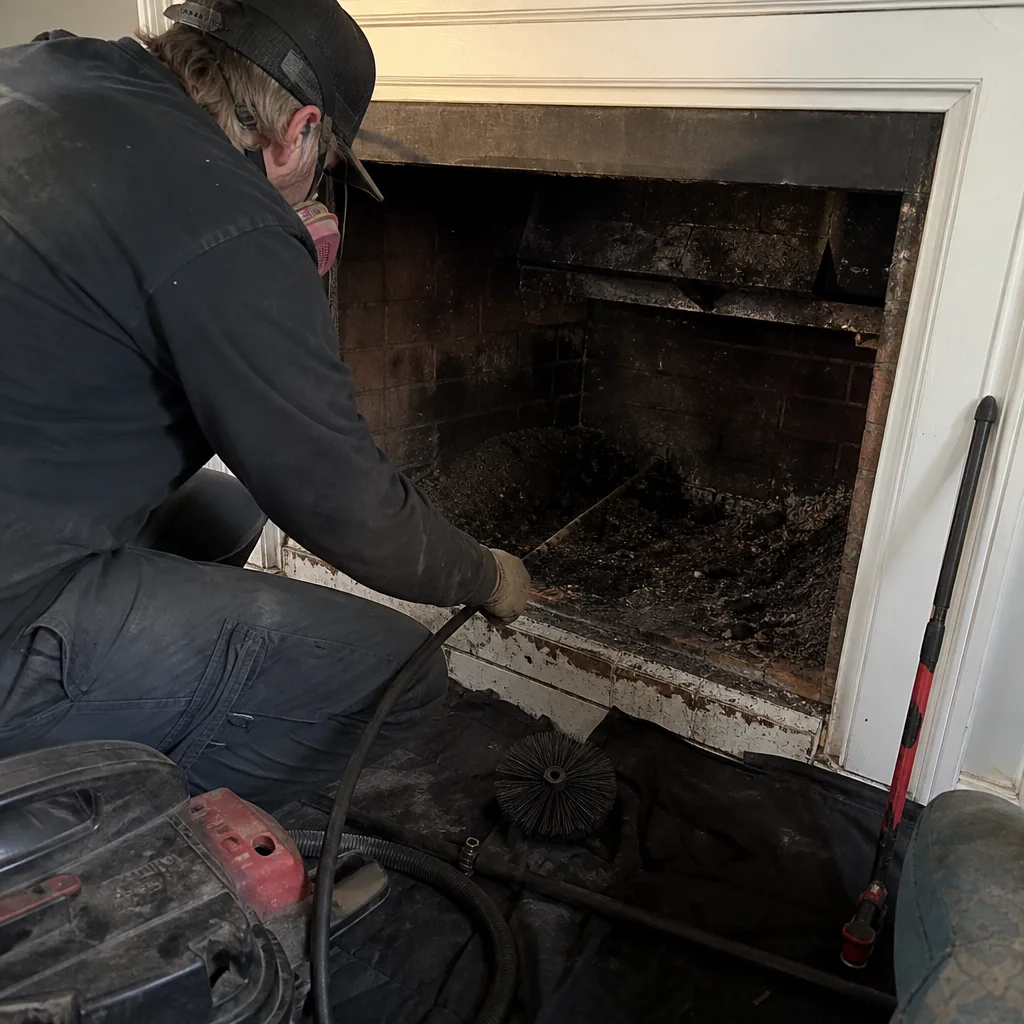 Before
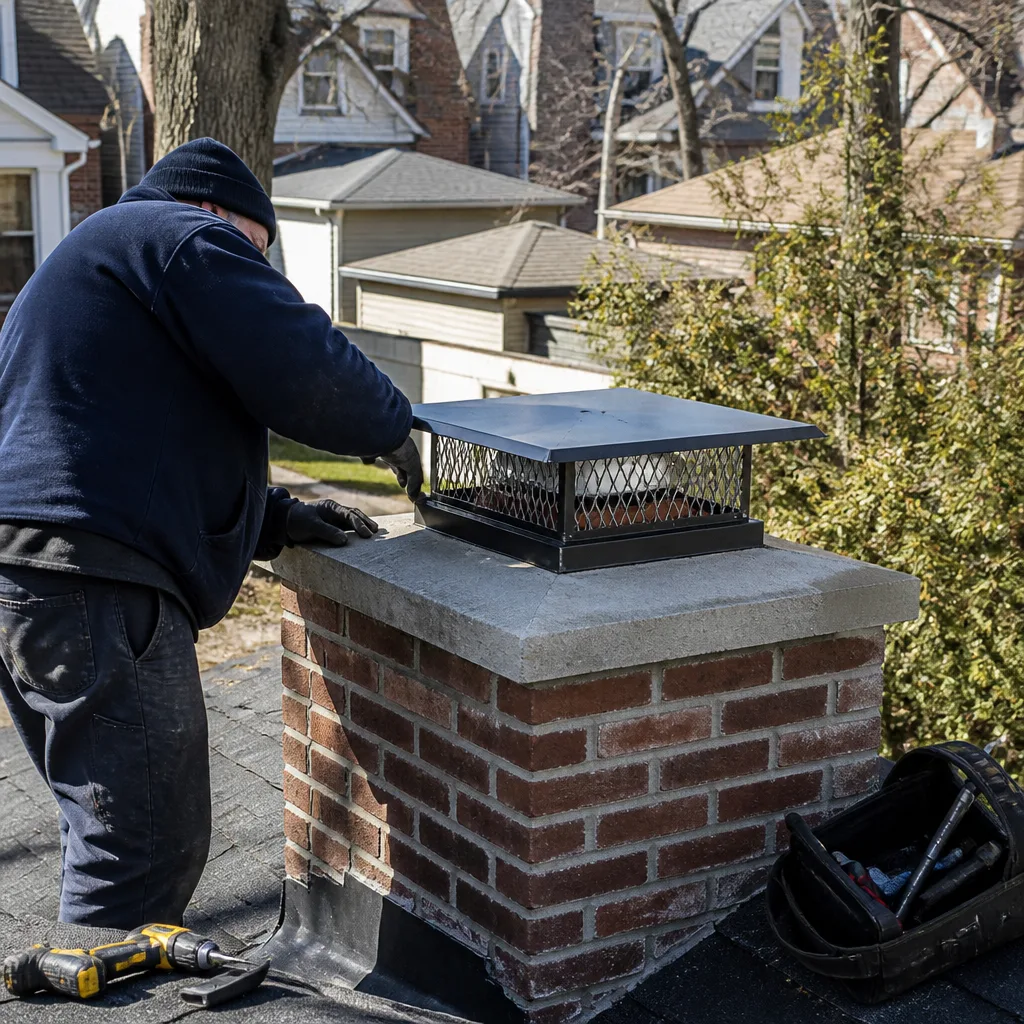 After
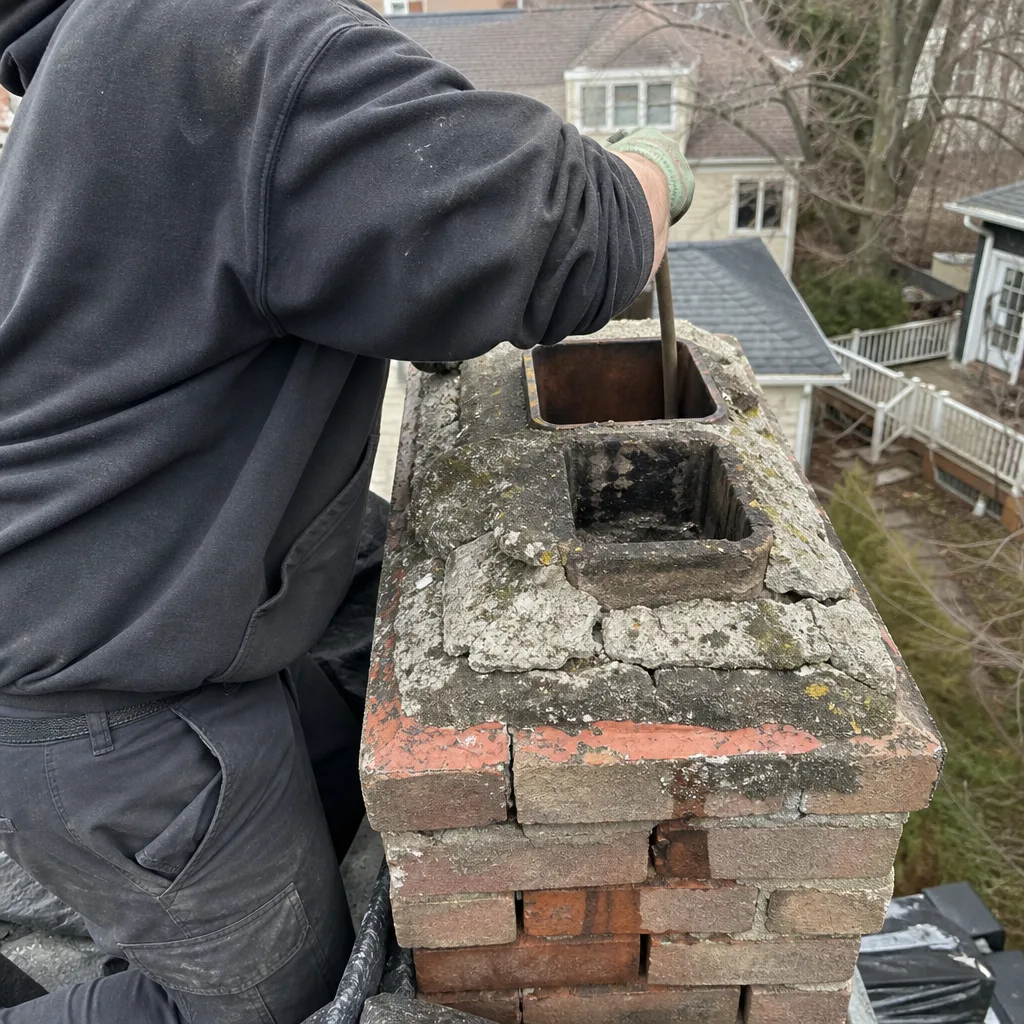 Before
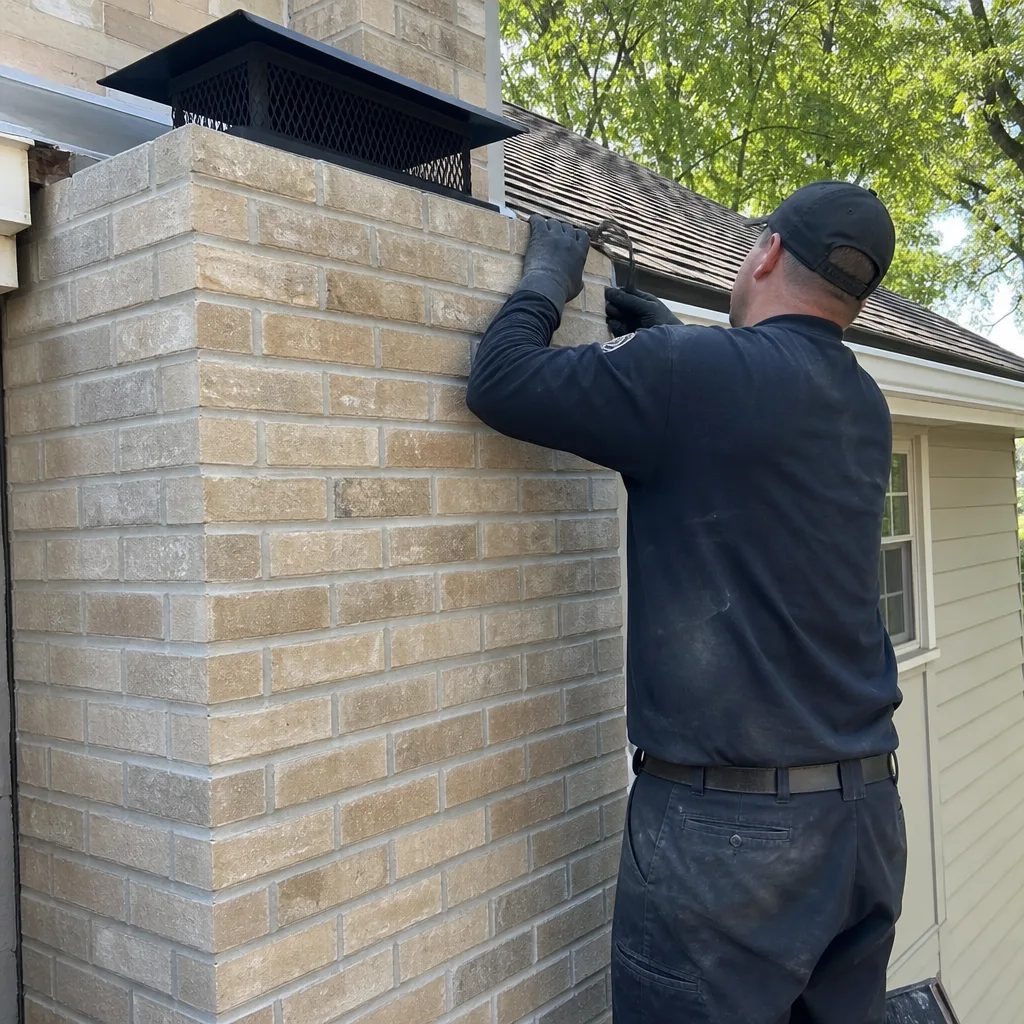 After
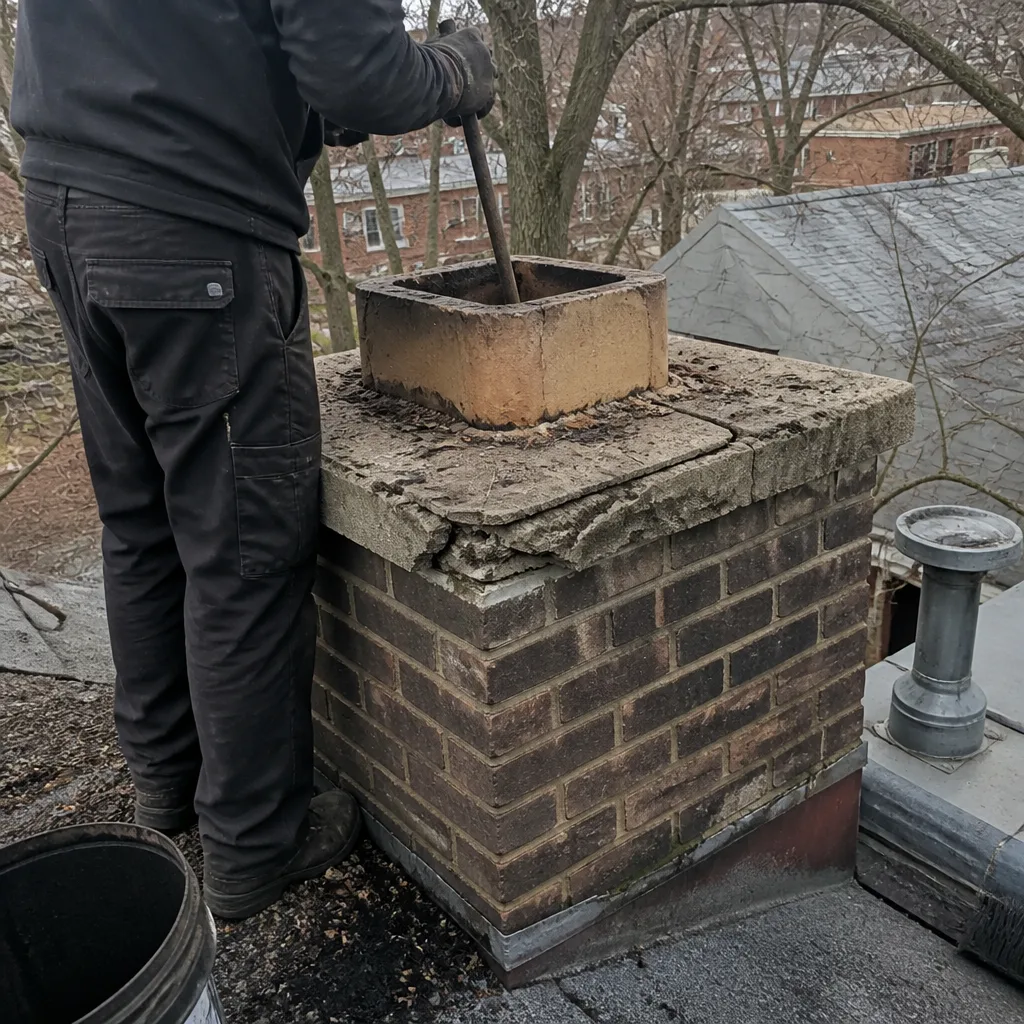 Before
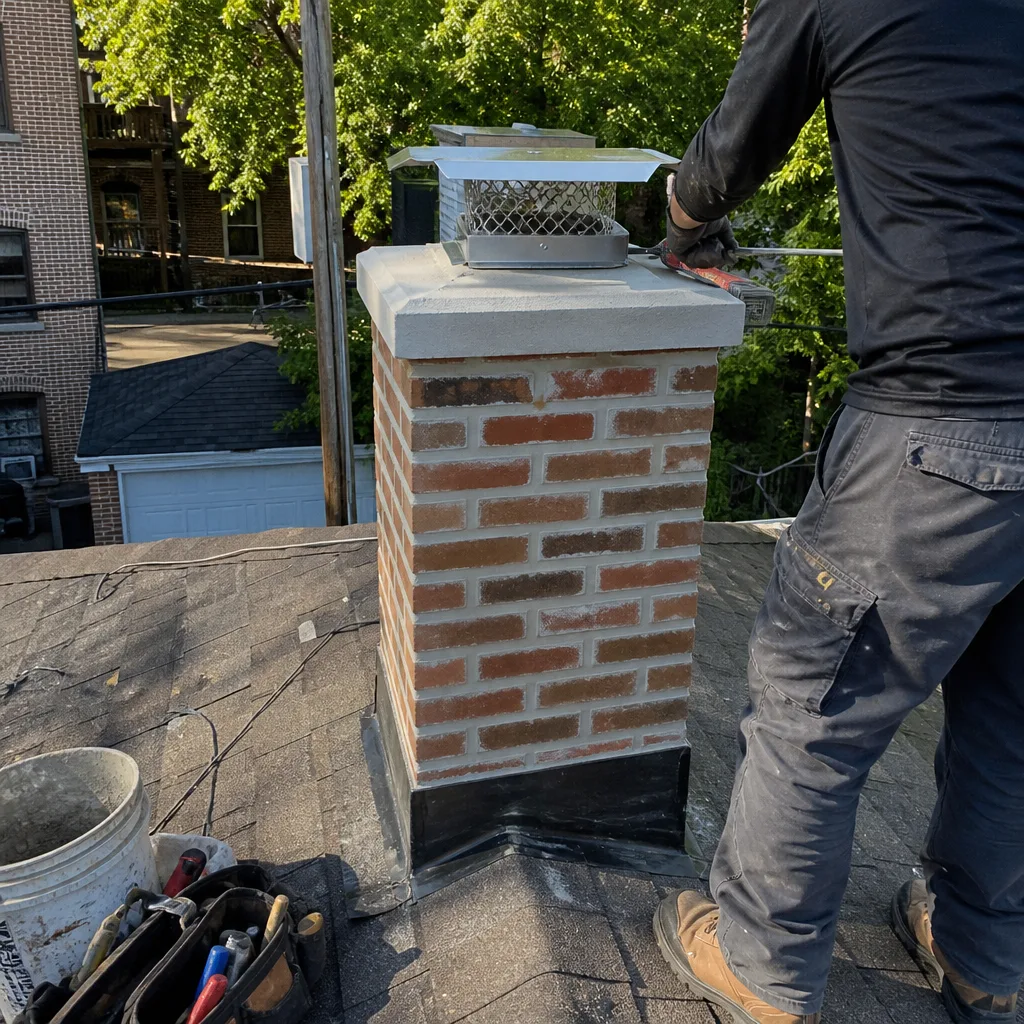 After
When to Call a Professional
Call a professional if you see glazed, shiny creosote, if you smell smoke when the fireplace isn’t in use, if you hear debris falling inside the flue, if you see cracks in the firebox or exterior brick, if water stains appear on ceiling near the chimney chase, or if you haven’t had the flue inspected in over a year. These are signs that the system is talking to you. A professional sweep can listen properly, with a camera, from the roof, without guesswork. Sandstone Chimney Sweep offers free estimates in Near North Side. Call (833) 589-7835 if you’re unsure whether you need a sweep or an inspection before the next cold front.
Frequently Asked Questions
A professional chimney sweep in Near North Side typically costs $180 to $350 for a standard cleaning with a Level 1 inspection, depending on flue height, roof access, and the amount of creosote present. Heavy glaze or chemical treatment can add $100 to $200. Call (833) 589-7835 for a firm quote based on your chimney’s specifics.
You can technically run a brush from the bottom up through the firebox, but this pushes creosote and soot into your living room and still doesn’t give you access to the cap, crown, or upper flue. On a multi-story Near North Side rowhouse, the flue is too tall for a bottom-up kit to reach the top cleanly. Professional cleaning is the practical option.
The National Fire Protection Association recommends an annual inspection with cleaning as needed. For a wood-burning fireplace used regularly through a Chicago winter, that effectively means an annual sweep. Gas fireplaces can go longer, but they still need periodic inspection of the venting system.
Chimney cleaning logs can loosen light creosote deposits, but they don’t remove built-up glaze and they can’t inspect the liner, smoke chamber, or cap. Use them as a supplement between professional cleanings, not as a substitute for one.
If you skip the annual sweep, creosote accumulates fastest in the places you can’t see: the smoke chamber, the offset bends, and the upper flue. The first sign of trouble is often a chimney fire, or a slow water leak that has been damaging masonry for years before you notice the stain. A $200 sweep is the cheapest protection against a $5,000 repair.
Sandstone Chimney Sweep services the entire Near North Side, including Cabrini Green, Old Town, the Gold Coast, River North, and the surrounding blocks. If you’re within driving distance of downtown Chicago, we can get to you. Sandstone Chimney Sweep home lists our full service area and contact details.
The Bottom Line
The question isn’t whether you can clean your own chimney. The question is what you lose by doing it yourself. What you lose is the inspection: the camera scope, the damper check, the cap evaluation, the exterior masonry review. What you lose is documentation: the dated invoice that satisfies an insurer and proves reasonable maintenance. What you lose is time on a roof that was never designed for amateur access. For most Near North Side homeowners, the professional sweep costs $130 to $230 more than a hardware kit and buys information that the kit physically cannot provide. If your chimney is due, call (833) 589-7835 and get the inspection that goes with the clean. Your flue is a system, not just a pipe.
Written by the team at Sandstone Chimney Sweep, serving Near North Side since 2017.