
Last updated October 30, 2026
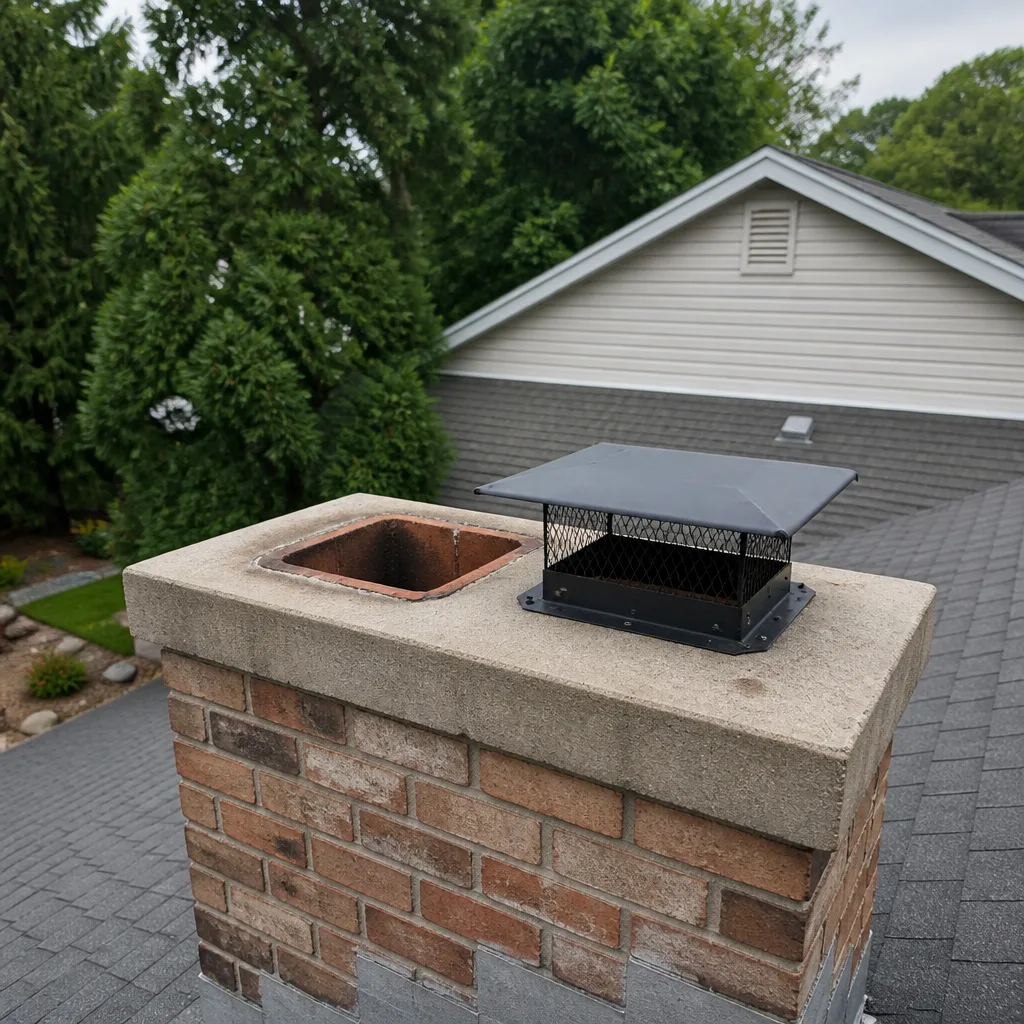 Sweep & inspection
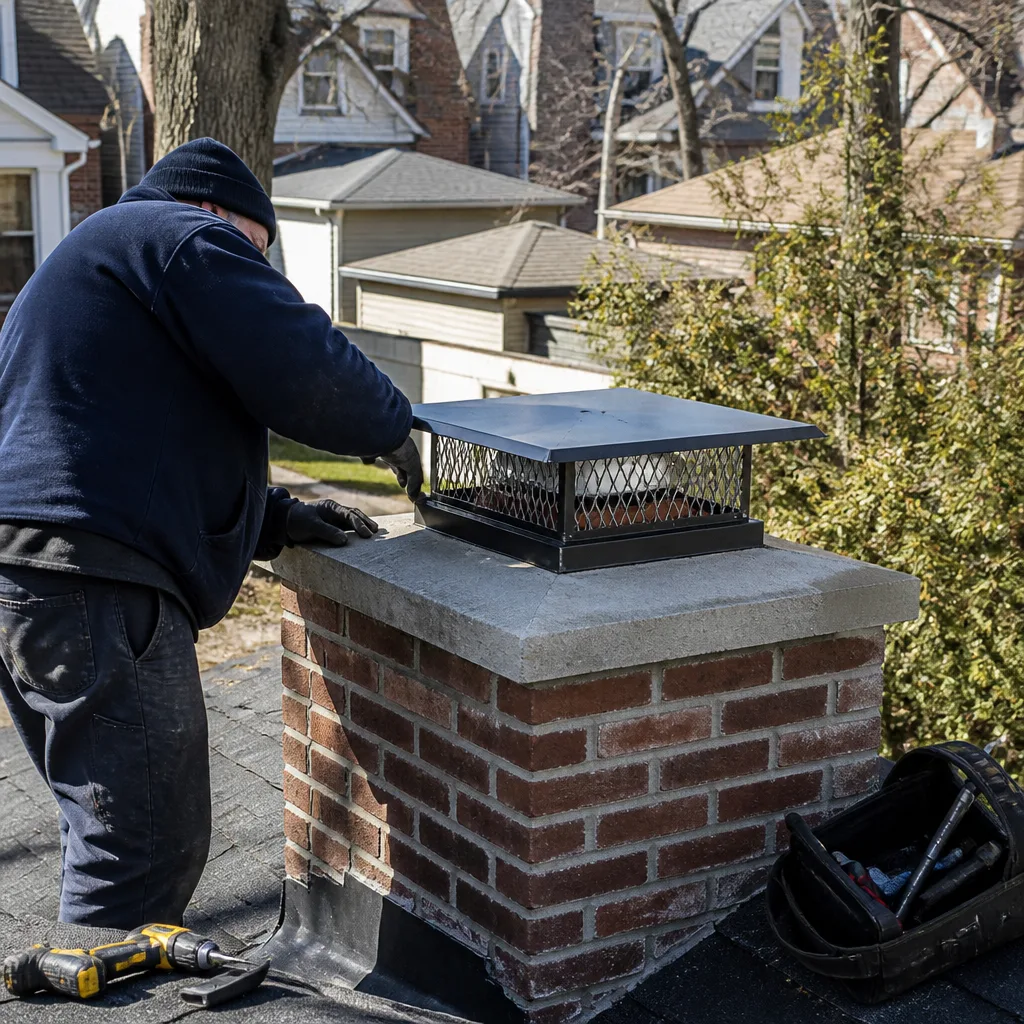
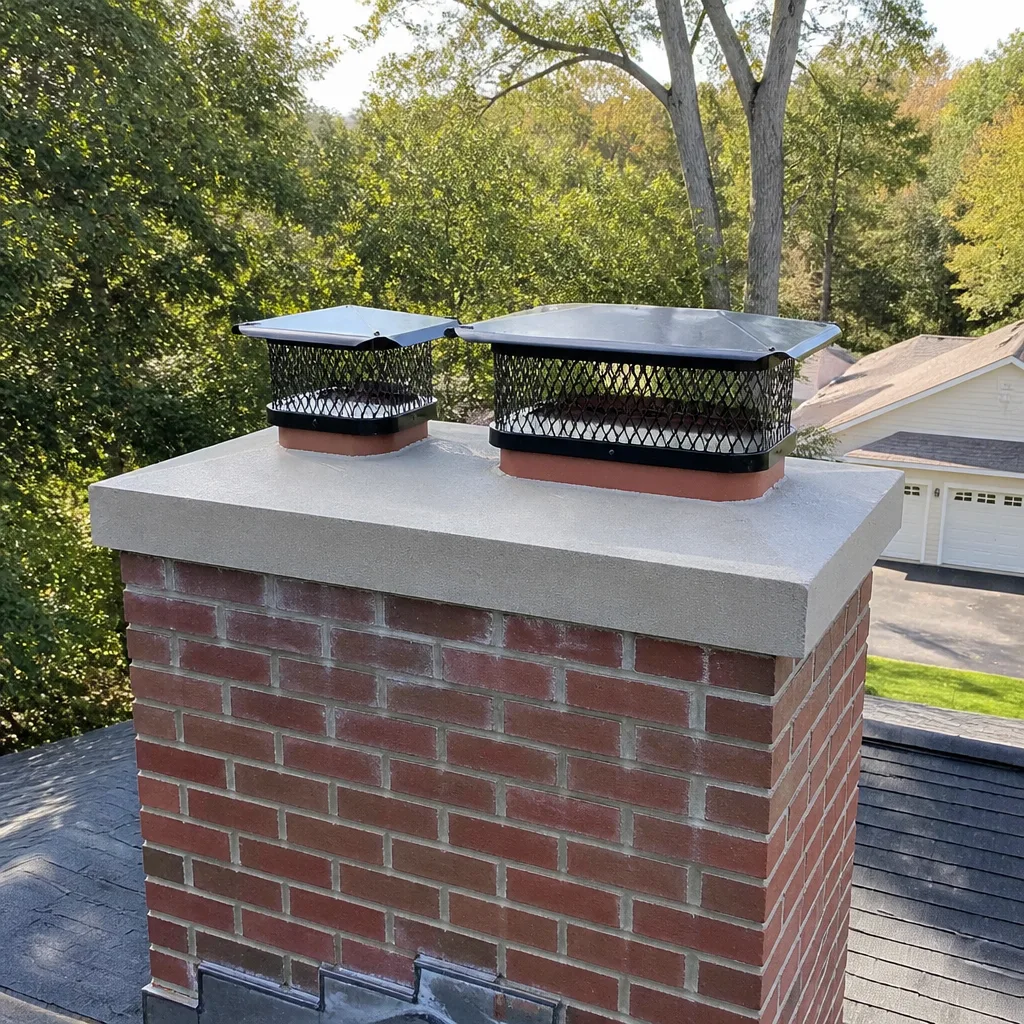 Caps & crowns
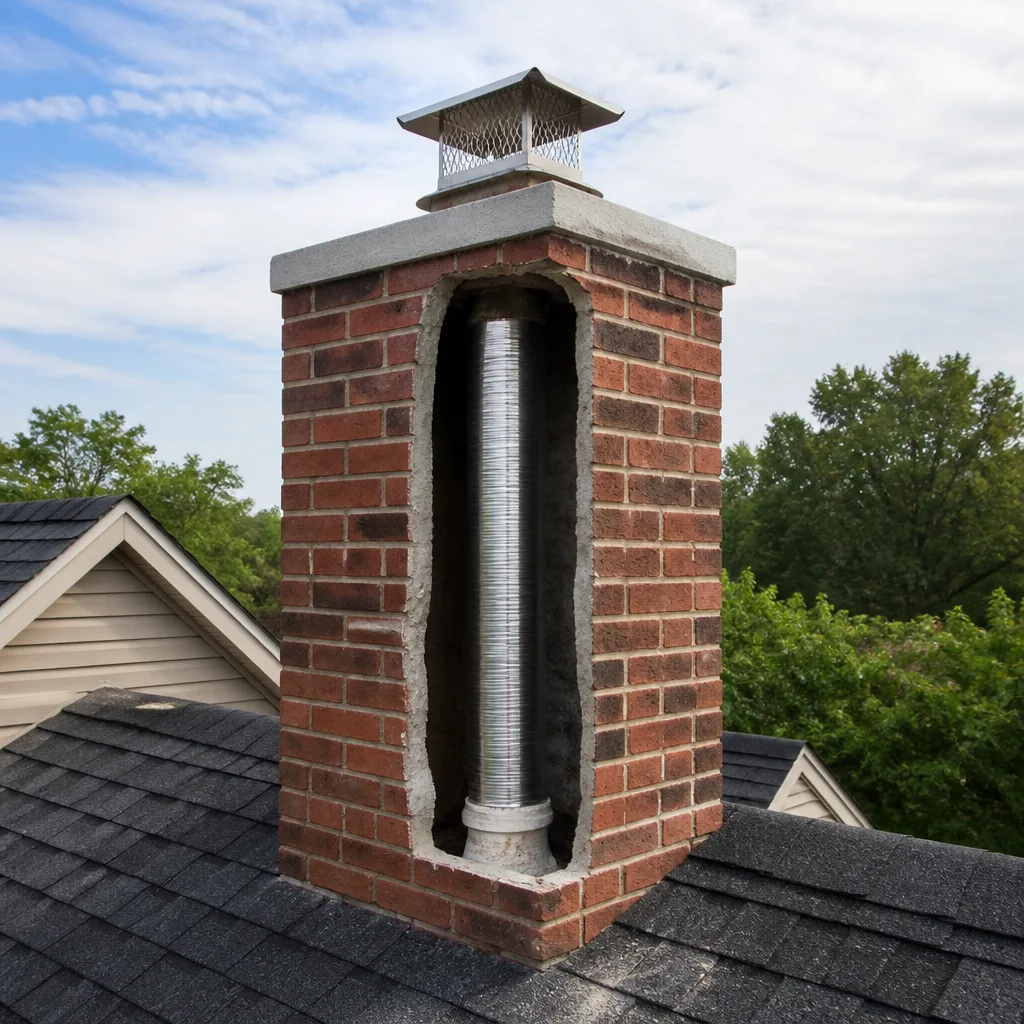 Flue relining
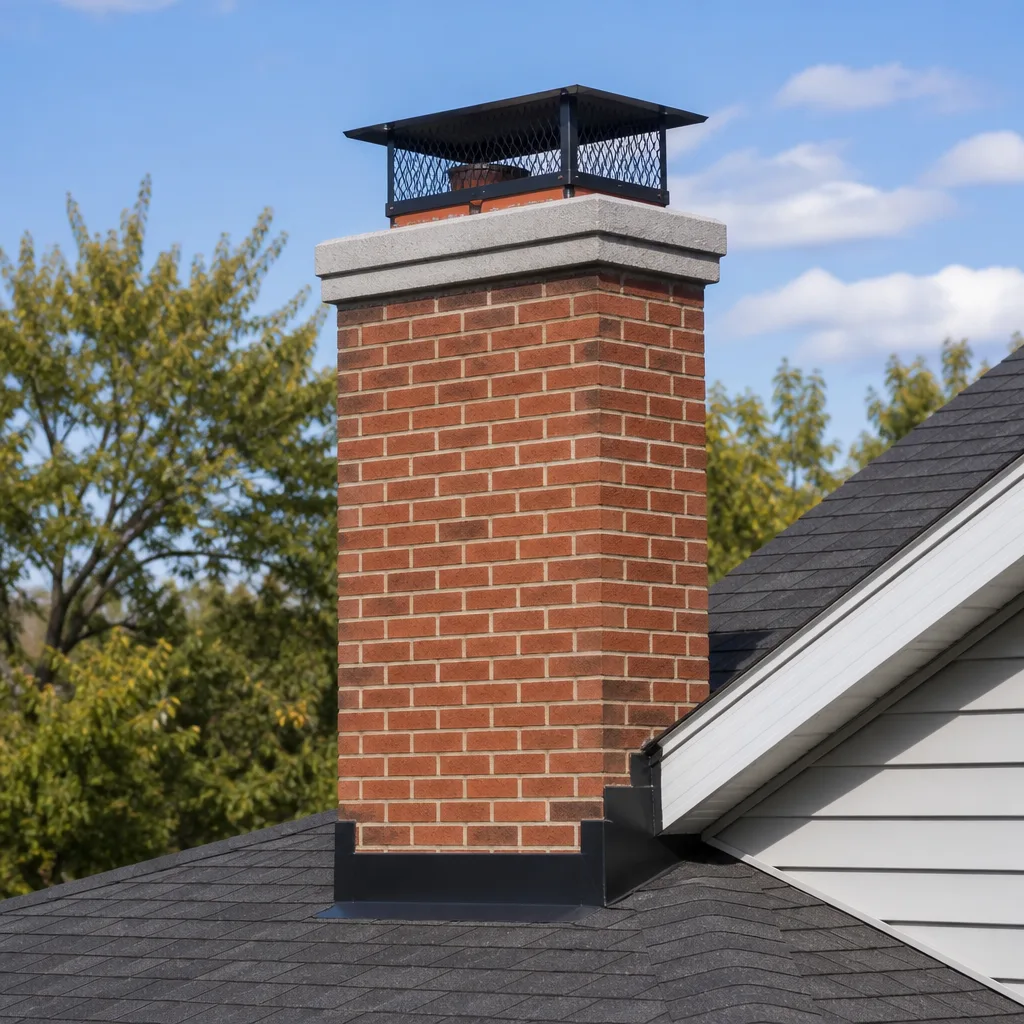 Masonry repair
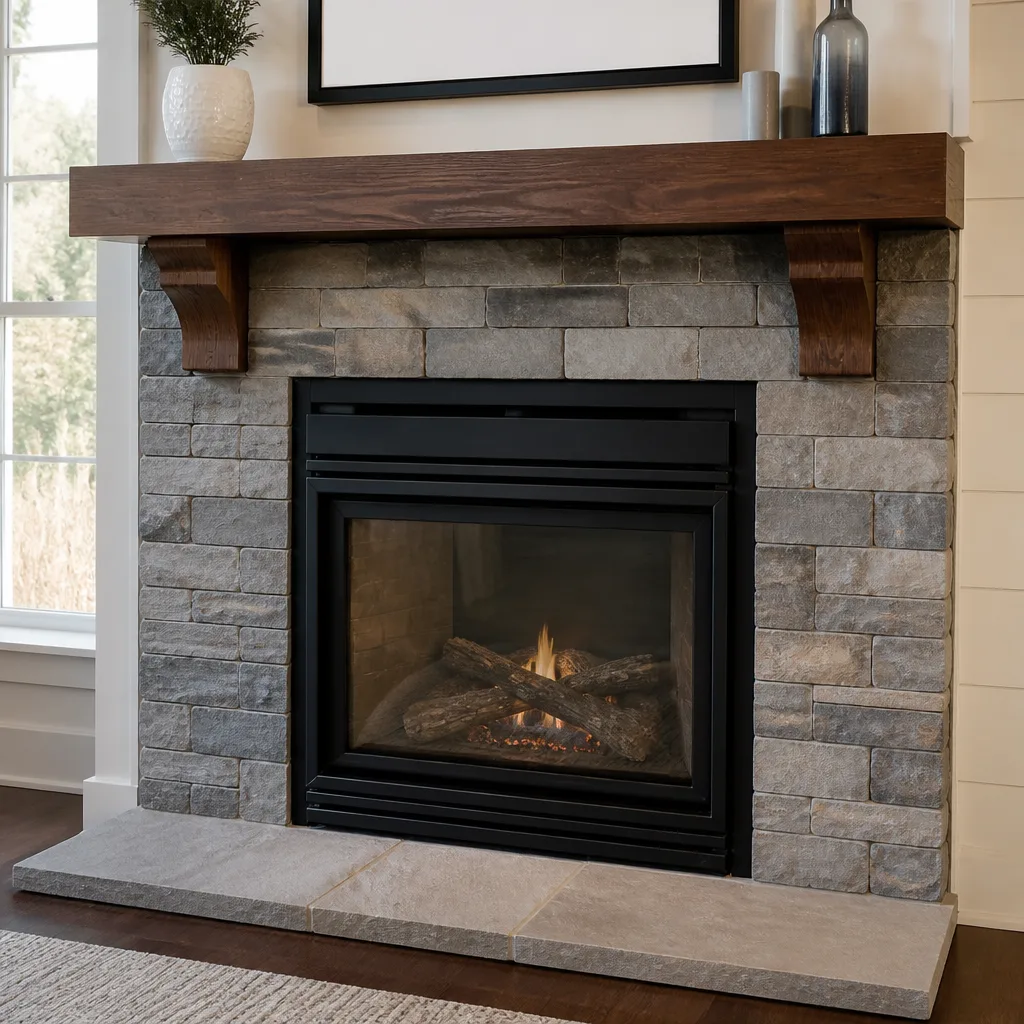 Gas fireplace service
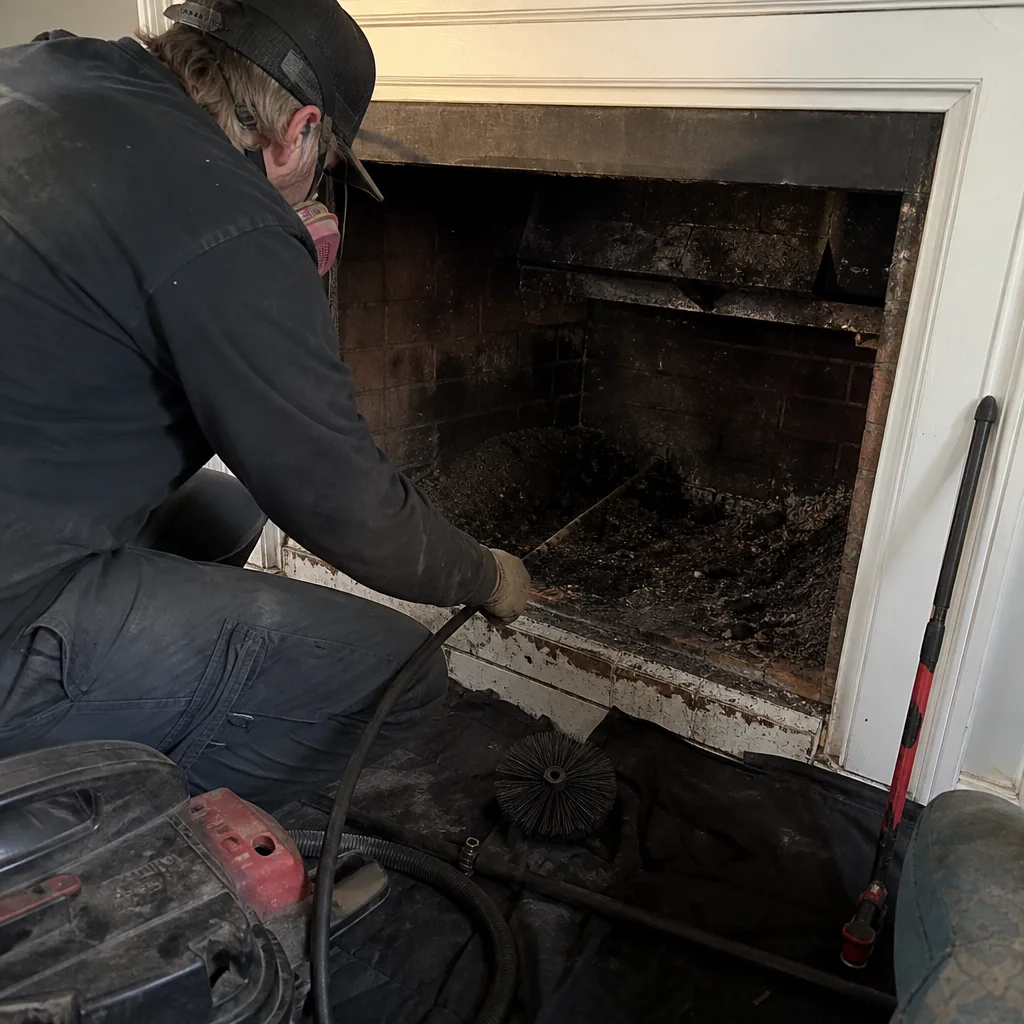
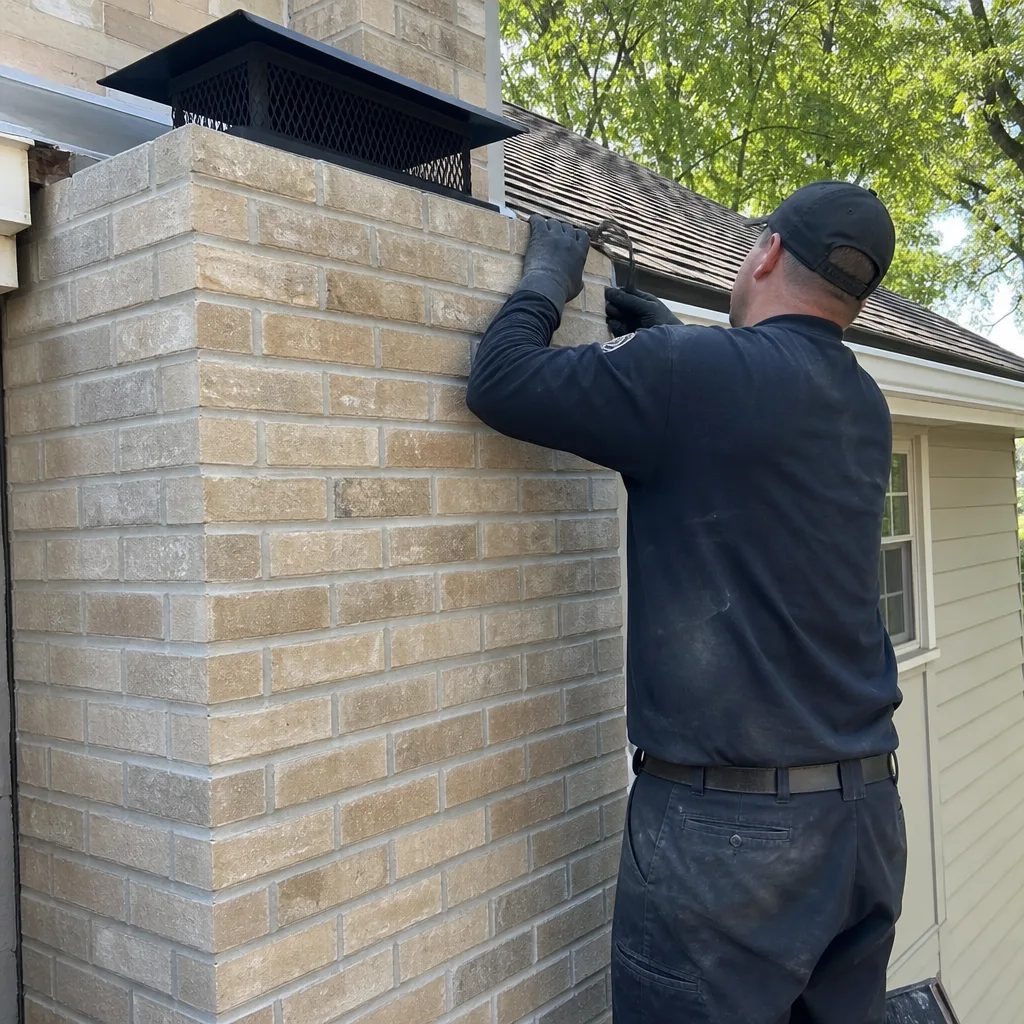
Level 1 sweep and inspection to the NFPA 211 annual standard - flue, crown, cap, and flashing checked and photographed
Chimney sweep logs do not sweep chimneys. They loosen some creosote - which then falls where a brush and vacuum still have to collect it.
Chimney Cleaning Permits, Codes & Inspections in IL: What You Need to Know
An unpermitted chimney liner replacement won’t fail inspection until you’re at the closing table, and by then it’s your problem to fix on someone else’s timeline. That’s the quiet trap most Near North Side homeowners don’t see coming. They hire a contractor, the contractor says no permit is needed, the work gets done, and five years later a title company flags the chimney during a routine seller’s disclosure review. This guide walks through where the permit line actually falls under Illinois and Chicago code, what NFPA 211 requires, what inspectors look for, and which documents you should keep in a folder before you ever list the house.
Styles & brands we work with
Quick Answer
Routine chimney sweeping and inspection do not require a permit in Illinois or Chicago. However, structural repairs including chimney liner replacement, firebox rebuilding, and significant masonry work do require permits through the City of Chicago Department of Buildings, and unpermitted work of that type creates title, insurance, and resale liability that attaches to the homeowner, not the contractor.
Table of Contents
- Where the Permit Line Actually Falls in Chicago
- NFPA 211 and Chicago Code: Where They Align and Where They Split
- CSIA Level 2 Inspections and What Insurers Actually Want
- Why Unpermitted Chimney Work Shows Up at Closing
- The Documentation Folder Every Chimney Owner Should Keep
- Repair Categories Contractors Skip Permits On (and Who Pays for That)
- Near North Side Climate and Code: What It Means for Your Chimney
- Common Mistakes to Avoid
- When to Call a Professional
- Frequently Asked Questions
- The Bottom Line
Where the Permit Line Actually Falls in Chicago
Let’s get the simple part out of the way first. If you’re scheduling a routine chimney sweep, inspection, or minor maintenance like replacing a damper plate or a chimney cap on an existing flue, no permit is required in Chicago; see our Chimney Sweep Maintenance Checklist for Near North Side Homeowners for a full breakdown. These are considered maintenance tasks under the Chicago Building Code, and the Department of Buildings does not ask homeowners to file paperwork for them. That’s what most homeowners in Near North Side already understand, and it’s correct.
But here is where the line gets sharp. The moment work involves the structural integrity of the flue, the firebox, or the masonry system around them, the City of Chicago treats it as a repair requiring a permit. That means:
- Chimney liner replacement: If a sweep finds cracked clay tiles or a failed steel liner and the fix involves removing and replacing that liner, a permit is required. This is true whether the new liner is stainless steel, aluminum, or a poured-in-place system.
- Firebox rebuilding: Rebuilding a damaged firebox involves structural masonry work inside the home. Chicago requires a permit for firebox reconstruction, particularly when the repair changes the dimensions or fire-resistance rating of the original assembly.
- Partial or full chimney rebuilding: Repointing a few bricks is maintenance. Rebuilding a chimney crown, rebuilding the top several courses of brick, or tearing down and reconstructing a leaning stack is structural work that requires a permit.
- Chase cover replacement on prefabricated chimneys: This one surprises homeowners. On factory-built fireplace systems, replacing a rusted chase cover may be treated as a repair to the listed assembly, and if the replacement changes the clearances or the termination, a permit is needed. A simple like-for-like cover swap typically is not.
The reason Chicago is stricter than some of the collar counties is simple: housing density. A chimney fire in a brownstone or a high-rise condo building in Near North Side doesn’t just threaten one unit. It threatens the shared wall assemblies, the roof structure, and every adjacent residence. The city’s code enforcement posture is written for that reality. In practice, we find that a conversation with the Department of Buildings about whether a specific repair needs a permit is usually faster than assuming it doesn’t. And the homeowner, not the contractor, is the one who carries the liability if the city flag comes down later.
NFPA 211 and Chicago Code: Where They Align and Where They Split
NFPA 211 is the national standard for chimneys, fireplaces, vents, and solid fuel burning appliances. It’s the document a CSIA-certified sweep references when they talk about clearance to combustibles, creosote thresholds, and liner sizing; our Chimney Sweep Troubleshooting: Common Problems and How to Fix Them covers what to do when those standards aren’t met. Chicago has adopted much of NFPA 211 by reference into the Chicago Building Code, but there are local amendments and enforcement differences that homeowners should understand.
Where they align:
- Both NFPA 211 and Chicago code require that a chimney serving a solid fuel appliance be inspected annually and cleaned when creosote buildup reaches 1/8 inch.
- Both require that any flue serving a fireplace or wood stove maintain proper clearance to combustible framing, typically 2 inches for exterior masonry chimneys and 1 inch for interior masonry chimneys when the flue is lined.
- Both specify that when a flue liner is cracked, spalled, or has gaps in the mortar joints, the chimney is unsafe to use until the liner is repaired or replaced.
Where they split:
- Enforcement authority: NFPA 211 is a standard, not a law. Chicago Building Code is law. A sweep can flag a violation of NFPA 211 all day long, but only a city inspector can enforce correction. That distinction matters when you’re negotiating after a fire or a failed inspection.
- Permit thresholds: NFPA 211 is silent on permits. It’s a technical standard. Chicago code sets the permit requirement. Contractors sometimes cite NFPA 211 as though it settles the permit question. It does not.
- Historic district overlays: Some neighborhoods in Near North Side fall under landmark district review. In those areas, external chimney work, including rebuilding or significant repointing, may trigger a separate review through the Commission on Chicago Landmarks. NFPA 211 has nothing to say about that. The local process does.
- Gas appliance venting: NFPA 211 covers solid fuel. Gas fireplace venting falls under the International Fuel Gas Code, which Chicago has adopted with its own amendments. So the permit question for a gas log set installation or a direct-vent replacement follows a different code path than a wood-burning fireplace.
For Near North Side homeowners, the practical takeaway is this: a sweep who tells you a repair is “required by code” is usually right, but you should ask which code and whether a permit is part of that requirement. Those are two different questions.
CSIA Level 2 Inspections and What Insurers Actually Want
A CSIA Level 2 inspection is the standard documentation that insurance companies ask for after a chimney fire, and in many cases, before they’ll reinstate coverage. The Level 2 inspection is more than a visual once-over. It includes:
- Accessible interior and exterior examination: The sweep examines the firebox, smoke chamber, flue, crown, and exterior masonry from every accessible angle, including the roof when safe to access.
- Video scanning of the flue interior: A camera is run through the full length of the flue to document cracks, gaps, creosote accumulation, and liner condition. This is the part insurers care about most. It produces an objective record.
- Clearance verification in attics and crawl spaces: The inspector checks that the chimney maintains proper clearance to combustibles in concealed spaces, which is where hidden fire risk lives.
- Documentation for the homeowner: The sweep provides a written report with photos and video stills, a condition assessment, and a written recommendation for repair where needed.
Here’s what insurers actually require after a chimney fire before they’ll reinstate coverage. First, they want the Level 2 inspection report. Second, they want proof that any recommended repairs were completed, typically with a follow-up inspection or a certificate of completion. Third, and this is the part homeowners miss, they may ask whether the repair required a permit and whether that permit had final inspection sign-off. If the answer is no permit was pulled and the work involved a liner replacement, the insurer may decline reinstatement until the city signs off. We’ve seen this happen in Near North Side with condo associations where the association’s master policy is involved. The documentation trail is not optional at that point. It’s the only thing standing between you and a lapsed policy.
Why Unpermitted Chimney Work Shows Up at Closing
Here’s the sequence that plays out more often than anyone wants to admit. A homeowner in Near North Side gets a Level 2 inspection. The sweep finds a cracked flue liner. The homeowner gets a quote, and the contractor says they can do the liner replacement without pulling a permit because “it’s an accessory repair” or “the city doesn’t require it for this scope.” The work gets done. It looks fine. The fireplace works. Five years later, the homeowner lists the property.
During the title search and the city’s municipal code compliance review, which Chicago now conducts in many residential sales, the property file shows a permit history gap. The home has no record of any liner replacement ever being permitted, but the liner is clearly newer than the home. A diligent buyer’s inspector flags it. The title company notes it. The seller now has to either produce the permit retroactively, which is possible but costs money and time, or disclose the unpermitted work and negotiate a price reduction or insurance bond. Worst case, the deal dies.
What’s especially frustrating is that this problem is entirely avoidable. The permit for a chimney liner replacement in Chicago is not expensive relative to the cost of the liner itself. It’s the inspection scheduling and the waiting that contractors want to avoid. That’s not your problem as the homeowner, or it shouldn’t be. When the work is done without a permit, the liability for that choice rests with you, not the contractor, because the property is in your name and the city’s enforcement runs against the property, not the person who swung the hammer.
This is also where the Sandstone Chimney Sweep home approach differs. We don’t frame permits as an inconvenience to be avoided. They’re part of doing the repair correctly, and we’d rather tell you that up front than let you find out at closing.
The Documentation Folder Every Chimney Owner Should Keep
If you own a fireplace in Near North Side, create a chimney folder; our more guides & resources can help you understand what to track. A physical folder or a digital one, it doesn’t matter, but keep it current. Here’s what belongs in it:
- Every inspection report: Level 1 annual sweep reports, Level 2 video inspection reports, any Level 3 documentation if you’ve ever had a hidden system exposed. Keep the photos and video stills.
- Every repair invoice: Liner replacements, firebox rebuilds, crown repairs, cap installations. The invoice should state what was done, what materials were used, and the date.
- Every permit and inspection sign-off: The permit number, a copy of the permit application, and the final inspection approval from the City of Chicago. This is the sequence that proves the work was legal.
- Manufacturer documentation for any installed components: If a stainless liner system was installed, keep the manufacturer’s data sheet, the UL listing, and the installer’s warranty registration. This matters when an insurer asks what’s inside the flue.
- Before-and-after photos: The sweep’s camera stills showing the crack, followed by photos of the completed replacement. This is your proof that the repair was real and appropriate, not a cosmetic patch.
- A maintenance log: Simple dated entries for every sweep, every inspection, every time you burned something unusual, every cap replacement. Insurance adjusters and title reviewers love a maintenance log. It shows the chimney was not neglected.
This folder is not busywork. When you sell, the buyer’s agent will ask about the chimney. When your insurer reviews your policy after a fire elsewhere in the building, the folder is what turns a three-week dispute into a one-day approval. And when a title reviewer asks whether the liner was permitted, you’ll have the answer in thirty seconds instead of a week of phone calls.
Repair Categories Contractors Skip Permits On (and Who Pays for That)
We’ve worked on enough Near North Side chimneys to know the pattern. These are the repairs that get done without permits most often, and why the homeowner absorbs the risk.
- Stainless steel liner replacements: The most common unpermitted chimney repair in Chicago. The liner goes in through the top of the flue, it’s hidden from view, and the work is typically done in one day. Contractors skip the permit because it adds a day of scheduling and an inspection appointment. The homeowner doesn’t see any difference, until they do.
- Firebox rebuilds with firebrick and refractory mortar: A significant structural repair that absolutely requires a permit in Chicago. Some contractors call it “repointing the firebox” to avoid the permit conversation. If the firebox is being rebuilt, not just pointed in a few spots, it’s a permit job.
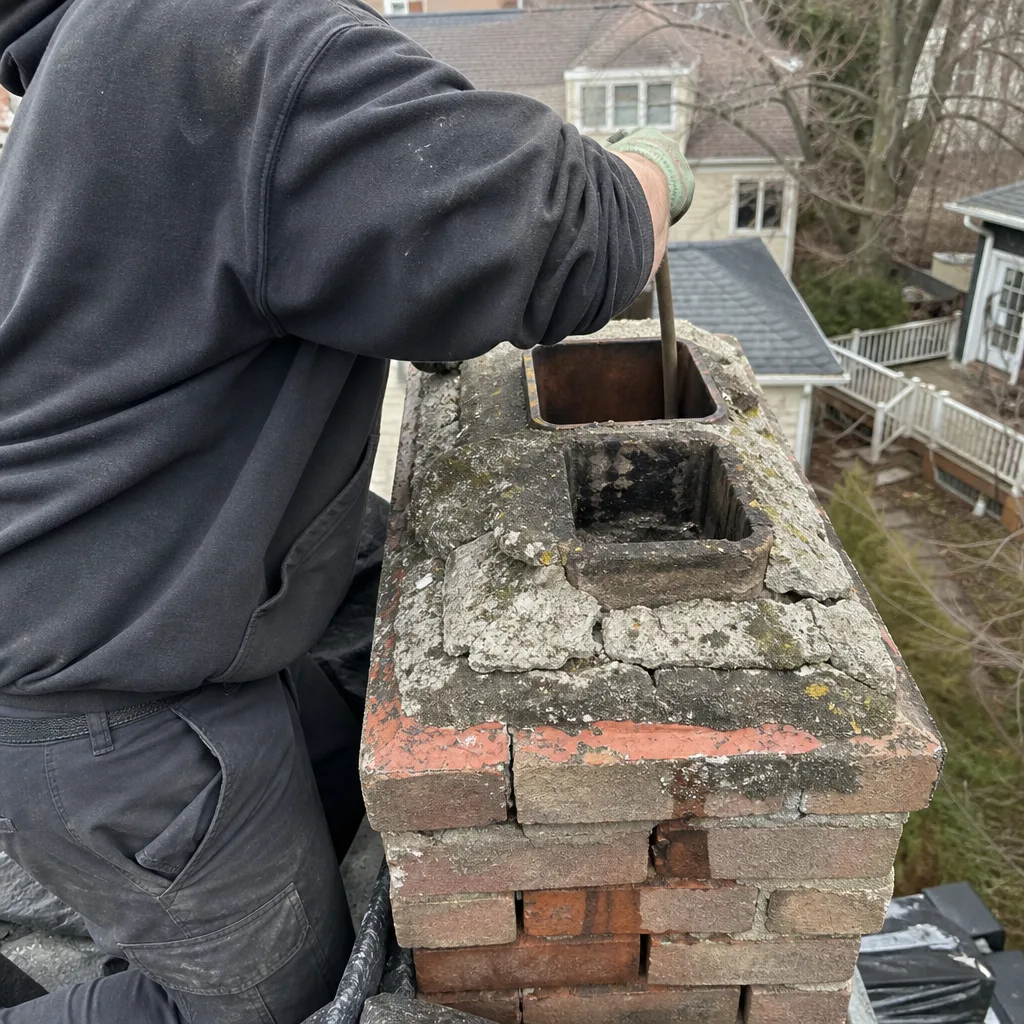
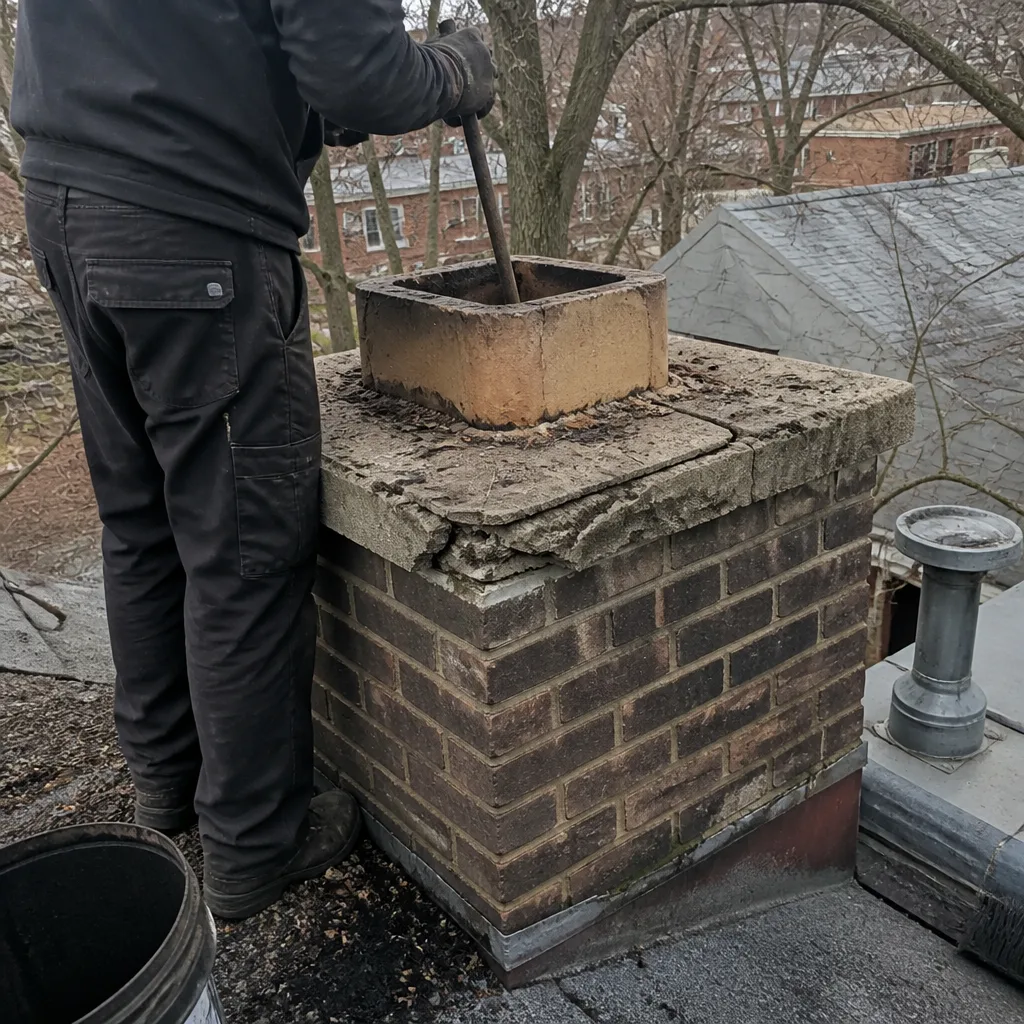
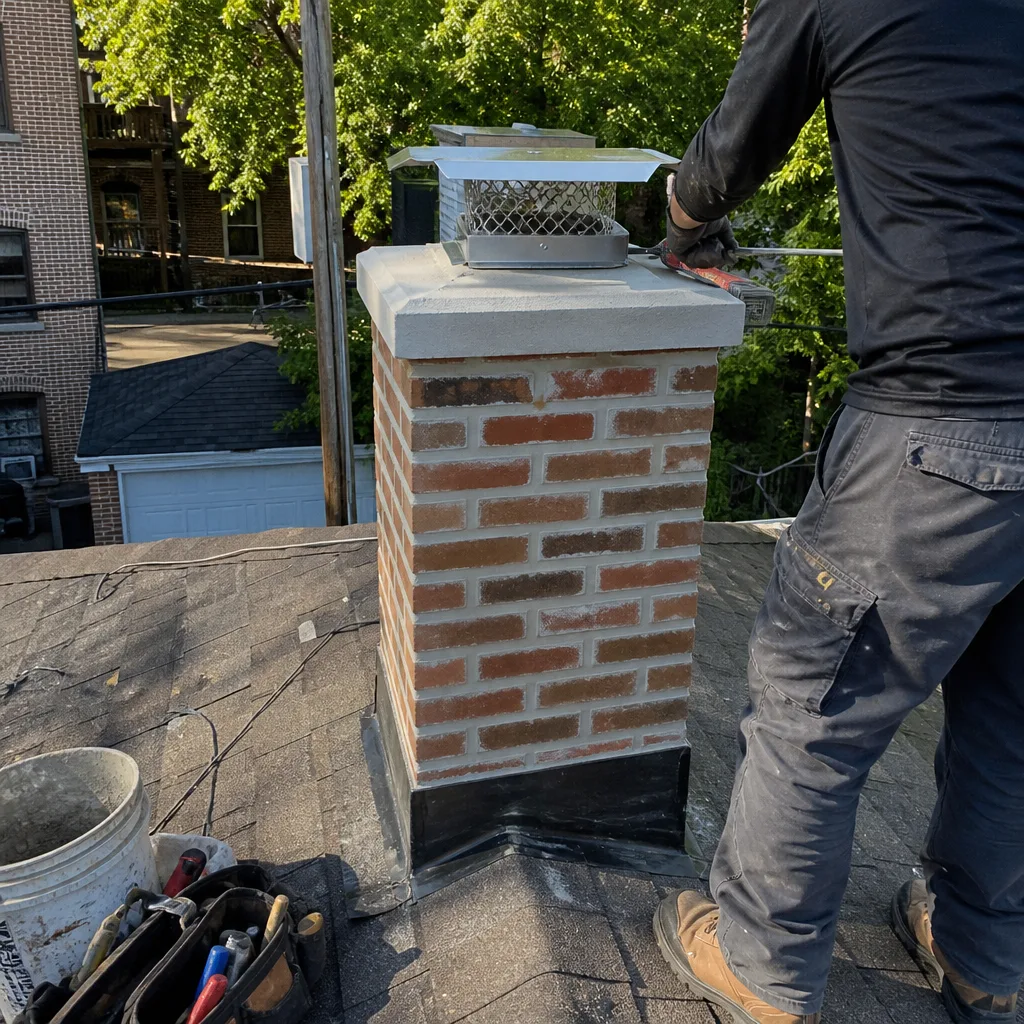
- Chimney crown rebuilding: When the crown is cracked and leaking, a proper fix involves removing the old crown and pouring a new one with a drip edge. In some parts of Chicago, this is considered structural. Contractors often treat it as maintenance. Ask before you pay.
- Smoke chamber parging: When a sweep discovers gaps and voids in the smoke chamber walls, the repair involves parging the surface with a refractory mortar. If the work changes the fire-resistance assembly, Chicago wants a permit. If it’s a thin cosmetic parge, it’s maintenance. The distinction is scope, and you want it in writing.
- Full masonry rebuilds above the roofline: When you can see daylight through the brick joints, the top of the chimney needs rebuilding. This is structural masonry work. No contractor should be doing it without a permit, and yet some do. If the city later flags it during a municipal code compliance review, the homeowner is the one who pays to fix the paperwork.
The common thread is that these are all hidden-system repairs. The work isn’t visible from the street, so there’s no obvious signal to the city that a permit might be needed. That’s exactly why the documentation folder matters. It’s the only way to prove later that the work was done, and whether it was done legally.
Near North Side Climate and Code: What It Means for Your Chimney
Near North Side chimneys take a beating from the freeze-thaw cycle. Winter temperatures swing from above freezing during the day to well below at night, and any water that has soaked into the brick or the crown expands when it freezes, cracking the masonry from the inside out. By the time spring arrives, the damage is done and summer is when the sweeping season reveals it. This climate reality means Near North Side homeowners should think about chimney inspection as a seasonal rhythm, not an occasional chore.
The code implications are specific. A cracked crown on a Near North Side chimney isn’t just an aesthetic issue, it’s a water intrusion pathway that accelerates liner deterioration. Chicago inspectors know this. If you’re selling a property and the municipal code compliance review finds evidence of water damage around the chimney chase, that triggers the request for a Level 2 inspection, and from there the permit history question follows. In our experience, the best time to address crown damage is the same season you discover it, not the spring before you list. The cost of the repair doesn’t change, but the leverage you have in a sale negotiation does.
This climate also makes the case for professional-grade materials. A rebuilt crown that uses a specification-grade mortar mix, the kind specified in NFPA 211 and used by masonry restoration contractors, will outlast a big-box mortar mix by a decade in Chicago’s freeze-thaw cycle. We use materials from DuraFlex for liner systems and HeatShield for resurfacing work, because those product lines are engineered for exactly the conditions Near North Side chimneys face. Your flue is a system, not just a pipe, and the freeze-thaw cycle doesn’t care what you paid for the short-term fix.
Common Mistakes to Avoid
- Assuming a sweep means you’re code compliant. A clean chimney is not the same as a code-compliant chimney. A sweep clears creosote. Code compliance means the flue liner, firebox, clearances, and termination meet Chicago’s standards. Those are separate assessments.
- Taking the contractor’s word on permits without verification. Illinois is a state where contractor licensing is unevenly enforced, and Chicago’s permit requirements for chimney work are stricter than many contractors admit. Call the Department of Buildings or check the permit history on your property before you pay for structural work.
- Filing an insurance claim for chimney damage without a Level 2 inspection. Insurers won’t process a chimney fire claim based on a verbal description. They want the video, the report, and the repair documentation. If you filed a claim and haven’t kept the inspection report, you may have already lost the leverage you need.
- Skipping the annual inspection because the fireplace “seems fine.” Chimney damage is almost never visible from the hearth. The flue liner could be cracked behind the brick and you wouldn’t know it until the first fire of the season pushes heat into the surrounding framing. In Near North Side, we recommend a Level 1 inspection before the first burn every year.
- Paying for a liner replacement without proof of materials. If a contractor charges you for a stainless steel liner and doesn’t provide the manufacturer documentation, you have no way to verify what went in. We’ve seen homeowners pay for premium materials and receive consumer-grade substitutes. The invoice should name the product line.
- Waiting until spring to fix freeze-thaw damage. The damage compounds. A cracked crown that leaks all winter will take out the liner and the smoke chamber by spring. The repair cost multiplies, and the permitting conversation gets more complicated when the scope expands.
When to Call a Professional
Call a professional when you see flaking brick around the chimney chase, when the damper sticks or won’t seal, when you smell smoke after the fire is out, or when your last inspection report is more than a year old. Also call when you’re buying or selling in Near North Side and need a Level 2 inspection to satisfy the title company or the insurer. And call before you schedule any repair that involves the liner, the firebox, or the structural masonry. The conversation about permits should happen before the work starts, not after. Sandstone Chimney Sweep offers free estimates in Near North Side, call (833) 589-7835 and we’ll walk through exactly what your chimney needs and whether a permit is involved.
Frequently Asked Questions
A standard chimney sweep in Near North Side typically runs between $180 and $300 depending on the height of the flue, the accessibility of the roof, and the level of creosote buildup. A Level 2 inspection with video scanning usually runs $100 to $200 on top of the sweep cost. If you’re scheduling both together, expect $280 to $500 for the full visit. Call (833) 589-7835 for a flat-price quote before we book, and our estimate is free.
No. Routine sweeping, Level 1 inspection, and minor maintenance like damper adjustment or cap replacement on an existing flue do not require a permit in Chicago. The permit question only arises when the work involves structural repairs like liner replacement, firebox rebuilding, or significant masonry reconstruction.
NFPA 211 recommends a sweep whenever creosote buildup reaches 1/8 inch, and a Level 1 inspection at least once a year before the burning season. For a Near North Side homeowner who burns wood regularly through a Chicago winter, that usually means one sweep per season, typically in the fall before the first fire.
The work gets done, the fireplace works, and nothing happens immediately. The problem surfaces at closing when the city’s municipal code compliance review or a buyer’s inspector flags the unpermitted repair. At that point, you’ll need to either pull a retroactive permit, pay for a post-hoc inspection, disclose the unpermitted work, or negotiate a price reduction. The timeline is no longer yours to control.
Insurance companies typically require a CSIA Level 2 inspection report, proof that recommended repairs were completed, and often proof that the repairs were permitted and passed final inspection. If the work involved a liner replacement and no permit was pulled, the insurer may decline to reinstate coverage until the city signs off.
We handle what we’re licensed to handle. For structural repairs in Near North Side, Chimney Repair in Near North Side includes permit guidance as part of the quote. We document everything so that when the city inspector signs off, you have the paperwork in hand. We find it, we fix it, and we make sure the fix is legal.
If you need dryer vent service in the same visit, Dryer Vent Cleaning in Near North Side covers that separately. Two fire hazards, one visit.
The Bottom Line
Chimney cleaning itself does not require a permit in Chicago. What requires a permit is the repair work that cleaning uncovers, and the difference between those two things is where Near North Side homeowners get into trouble. NFPA 211 sets the technical standard, but Chicago code sets the permit requirement, and the city’s enforcement posture is stricter than many contractors want to acknowledge. Keep your documentation folder current. Demand proof of materials. Ask the permit question before you pay, not after. And if you want a sweep who treats the chimney as a system, not just a pipe, call the team at Sandstone Chimney Sweep. We have been serving Near North Side since 2017, and Chimney Sweep in Near North Side is the page where our local service details live.
Written by the team at Sandstone Chimney Sweep, serving Near North Side since 2017.
See the difference
 Before
 After
 Before
 After
 Before
 After