
Last updated October 30, 2026
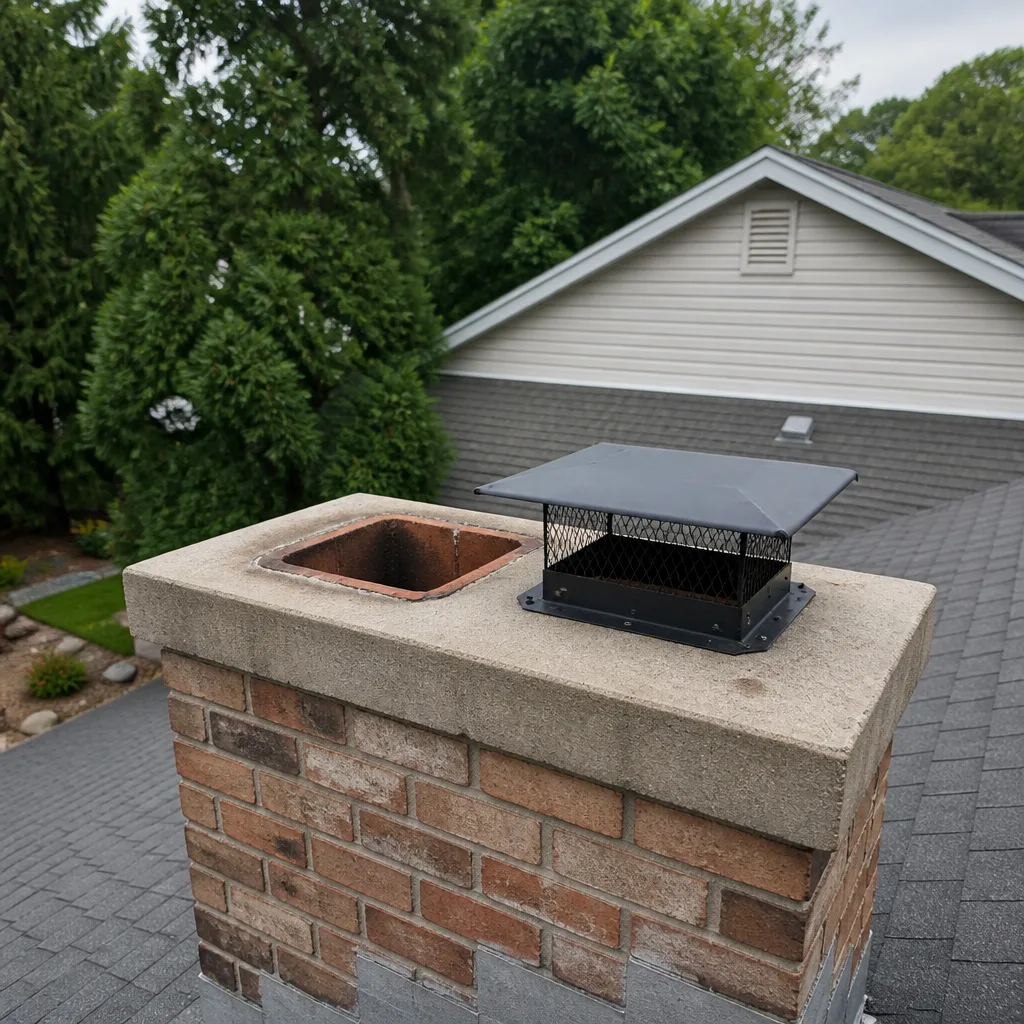 Sweep & inspection
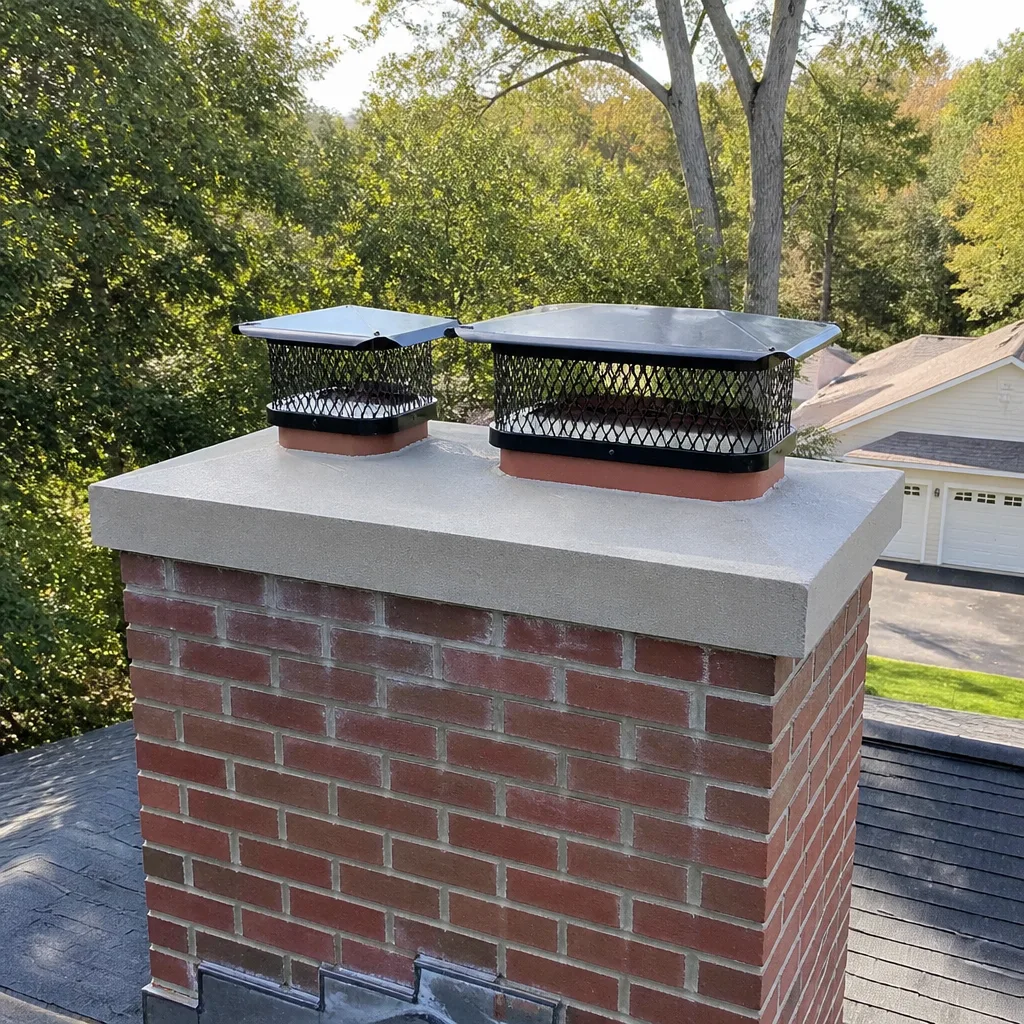 Caps & crowns
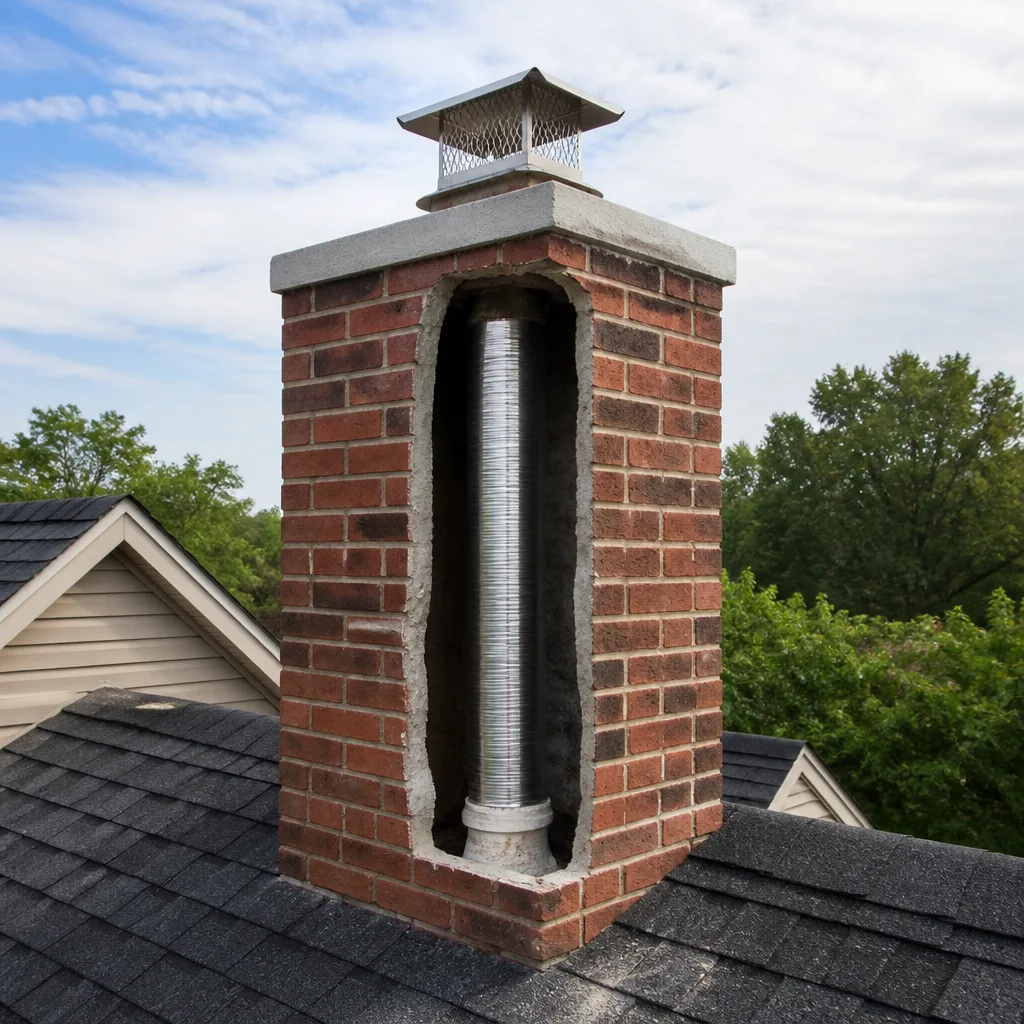 Flue relining
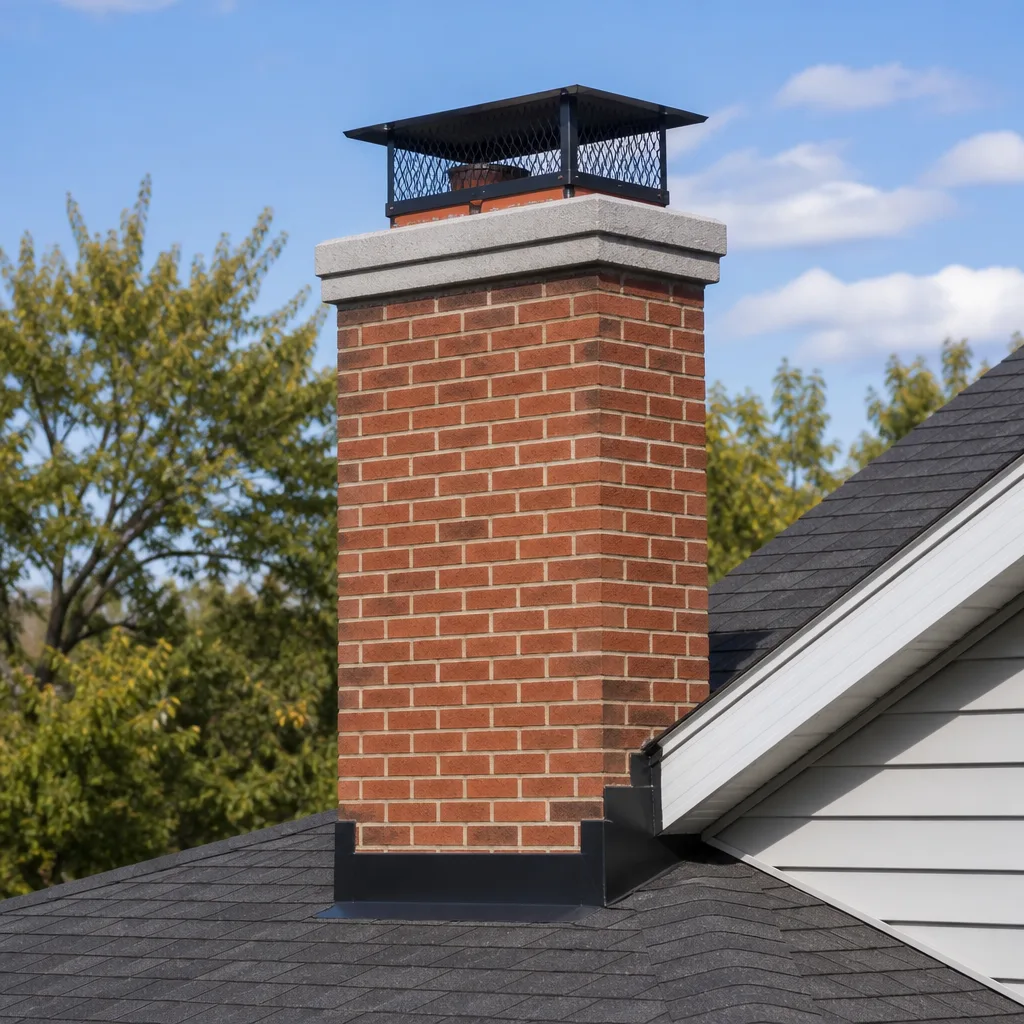 Masonry repair
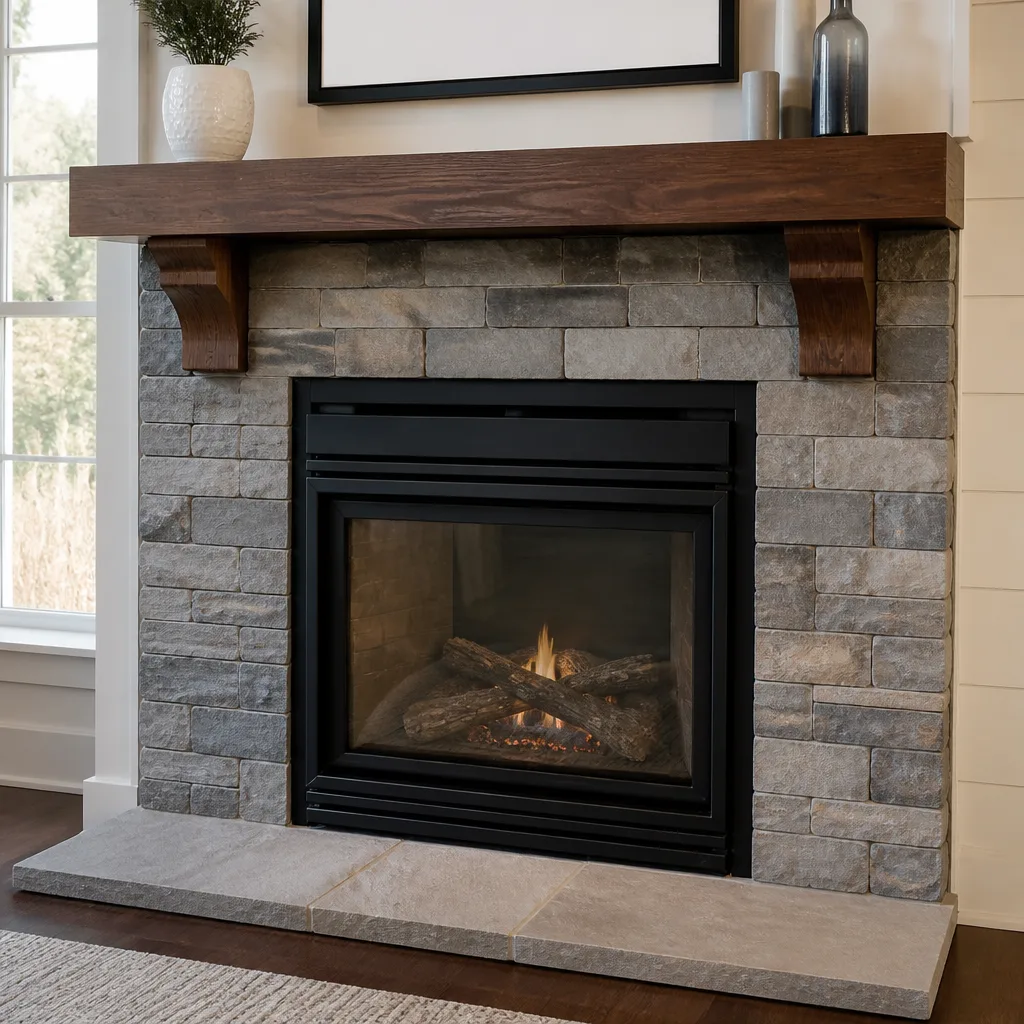 Gas fireplace service
Level 1 sweep and inspection to the NFPA 211 annual standard - flue, crown, cap, and flashing checked and photographed
Chimney sweep logs do not sweep chimneys. They loosen some creosote - which then falls where a brush and vacuum still have to collect it.
The Complete Chimney Sweep Guide for Near North Side Homeowners
Most chimney guides read like they were written for a generic suburban fireplace in a mild climate where winter is a rumor and the biggest threat is a squirrel. Near North Side homes sit within a mile of Lake Michigan, where freeze-thaw cycles hit masonry harder and longer than anywhere else in Illinois. That changes the maintenance math entirely. This guide explains what your chimney stack actually deals with year-round, why a basic sweep is rarely enough, and how to think about inspections, materials, and seasonal care in a dense urban neighborhood where the houses are old, the weather is aggressive, and the lake is always close. By the end, you’ll know what Chimney Sweep services should include, what your inspector should be looking for, and which repairs actually buy you time versus which ones simply burn money.
Quick Answer
A chimney sweep in Near North Side involves removing creosote and soot from the flue, but a proper service goes further: the sweep should inspect the flue liner, crown, flashing, and mortar joints for damage caused by lake-effect moisture and urban particulate. Most Near North Side chimneys need a Level 1 inspection with every sweep and a Level 2 inspection after winter or before a home purchase. Expect to pay between $180 and $340 for a standard sweep and inspection, with repairs quoted separately based on camera findings.
Styles & brands we work with
Table of Contents
- Why Near North Side Chimneys Wear Differently
- What a Chimney Sweep Actually Includes
- Level 1, Level 2, and Level 3 Inspections Explained
- How Urban Particulate Changes Creosote
- Specification-Grade Materials vs. Consumer Products
- Seasonal Maintenance Calendar for Near North Side
- Common Mistakes to Avoid
- When to Call a Professional
- Frequently Asked Questions
Why Near North Side Chimneys Wear Differently
Lake-effect moisture is not a minor footnote in chimney maintenance. It drives the entire conversation. Near North Side sits close enough to Lake Michigan that winter air carries more water vapor than inland neighborhoods, and that moisture infiltrates masonry through hairline cracks, porous brick, and worn crown coatings. When temperatures drop, that water freezes and expands by roughly nine percent. Repeated freeze-thaw cycles act like a slow-motion jackhammer, widening cracks and pushing mortar joints apart. After a decade of Chicago winters, a chimney that looked fine from the street can have significant internal deterioration.
Brownstones and greystones, which are common throughout Near North Side, age differently than the brick veneer chimneys you see in newer suburban construction. The mortar used in older masonry was often lime-based, which is softer and more breathable than modern Portland cement. That was intentional: it allowed moisture to escape. But that same soft mortar erodes faster, especially when the crown above it is compromised. In our experience, we regularly see chimneys in the Gold Coast and Old Town where the crown looks intact but the mortar below has been quietly washing out for years.
The chimney stack is a system, not just a pipe. Every component interacts with the others. A cracked crown lets water into the masonry. Water in the masonry weakens the mortar. Weak mortar lets more water in, and the freeze-thaw cycle accelerates. Meanwhile, the flue liner inside is dealing with its own set of problems. When a clay tile liner cracks due to thermal stress or moisture, it exposes the surrounding masonry to direct heat and corrosive flue gases. That is how a $300 crown repair becomes a $4,000 liner replacement.
What a Chimney Sweep Actually Includes
A chimney sweep is the removal of creosote, soot, and debris from the flue and smoke chamber. But the term gets misused as shorthand for something much broader. A proper sweep near Near North Side should include several distinct steps, and you should know what they are before you book.
Here is what a complete sweep and inspection looks like when it is done right:
- Interior protection setup: The sweep lays down drop cloths and runs a high-powered vacuum to prevent dust from entering the living space. If a company shows up without proper dust control, that tells you something about their standards.
- Flue inspection before brushing: The technician checks the flue with a camera or strong light before cleaning. This identifies the level of creosote buildup and reveals any cracks, blockages, or animal nesting that needs attention first.
- Mechanical brushing: A properly sized wire or poly brush is run through the full length of the flue, from the firebox to the chimney top. This removes glazed and unglazed creosote deposits.
- Smoke chamber and damper cleaning: Many sweeps stop at the flue, but the smoke chamber above the firebox is where creosote collects in thick, difficult-to-remove layers. A thorough sweep includes this area.
- Post-sweep camera inspection: After cleaning, the flue should be inspected again with a camera to document the condition of the liner, mortar joints, and any hidden damage.
- Written report: You should receive a summary of findings, including photos or video, so you can see what the technician saw. You should never be asked to take a recommendation on faith.
Many Near North Side homeowners schedule a sweep annually without knowing what they’re actually paying for. Some services are bare-bones flue brushings that skip the smoke chamber and damper entirely. That is not saving you money; it is leaving the most dangerous creosote deposits in place. Ask what specifically the service includes before you book. A reputable company will tell you without hesitation.
Level 1, Level 2, and Level 3 Inspections Explained
The National Fire Protection Association defines three levels of chimney inspection, and understanding the difference matters more in Near North Side than almost anywhere else. Freeze-thaw damage is not always visible from the roof, and a basic visual check can miss what is happening inside the masonry.
Level 1 Inspection
A Level 1 inspection is what most people think of as a standard chimney sweep. The technician inspects the readily accessible portions of the chimney: the firebox, damper, visible flue, and exterior stack that can be reached without special equipment. This is appropriate when the chimney has not changed in use and there are no known problems. For a well-maintained, regularly used fireplace, a Level 1 inspection accompanies every sweep.
Level 2 Inspection
A Level 2 inspection includes everything in Level 1, plus inspection of accessible attics, crawl spaces, and basements, and a video scan of the entire flue interior. This is the inspection you need after a major weather event, after a chimney fire, after a home purchase, or when you are changing the fuel type. Given the intensity of Chicago freeze-thaw cycles, we recommend a Level 2 inspection any spring following a winter with multiple sub-zero temperature swings. The camera reveals hairline cracks in clay liners and water intrusion patterns that are invisible from the exterior.
Level 3 Inspection
A Level 3 inspection is invasive. It may involve removing portions of the chimney or surrounding structure to access hidden areas. This is reserved for cases where a Level 2 inspection suggests serious concealed damage and the chimney needs a full diagnosis before major repair work. You rarely need a Level 3 inspection unless a Level 2 camera scan has already found something concerning.
Near North Side’s building stock is older, and many chimneys have been through decades of water exposure. If your home is over 40 years old and the chimney has not had a camera inspection in the last five years, a Level 2 inspection is not an upsell. It is the minimum responsible step before you trust that chimney through another winter.
How Urban Particulate Changes Creosote
Wood-burning fireplaces in dense urban neighborhoods accumulate a different creosote profile than their suburban or rural counterparts, and this is something most guides miss entirely. Near North Side’s air contains more particulate matter from vehicle traffic, building exhaust, and construction activity than what you would find in, say, Naperville or Barrington. When you burn wood, those particulates enter the flue along with the smoke and mix with the creosote as it condenses on the flue walls.
The result is creosote with a slightly different composition: darker, denser, and more likely to form a sticky, tar-like glaze than the flaky type that forms in cleaner air. Glazed creosote is more difficult to remove and more flammable than the flaky variety. It also holds heat more effectively, which increases the risk of a chimney fire when it reaches sufficient thickness.
Another factor is the density of Near North Side’s housing. Attached homes, rowhouses, and buildings with shared chimneys or closely spaced flues create wind patterns that affect draft. What this means in practice: even if you burn the same wood as your cousin in the suburbs, your chimney may accumulate creosote faster and in a more hazardous form. A once-a-year sweep may not be frequent enough if you burn regularly from October through March. Ask your sweep to measure creosote thickness, not just remove it, so you can calibrate your own maintenance schedule to what the flue is actually doing.
Specification-Grade Materials vs. Consumer Products
Most homeowners never think about the difference between a stainless steel liner from a professional brand and a cheaper option from a home improvement store. That is understandable. From the outside, they look similar. From the inside, they are not the same product.
Specification-grade materials are the components that certified chimney professionals specify for real-world conditions. These include stainless liner systems designed for specific fuel types and temperature tolerances, vapor-permeable crown coatings that allow moisture to escape while keeping water out, and resurfacing products engineered for the flue environment. We work with product lines from DuraFlex, HeatShield, Gelco, Olympia Chimney, Famco, and Copperfield because those are the systems professionals use when a chimney is meant to last.
Consumer-grade alternatives, by contrast, are often marketed as universal fit or quick fix. They are not built for the specific demands of a Chicago chimney. In Near North Side, where freeze-thaw and moisture are the primary threats, a vapor-permeable crown coating matters more than in Phoenix. A stainless liner rated for continuous high-temperature wood burning matters more than in a climate where fireplaces are decorative. Materials-matched repairs are not about spending more for the sake of spending more. They are about matching the component to the conditions it will actually encounter.
When a sweep recommends a liner, ask what brand they use and why. If they cannot tell you, or if the answer is whatever is cheapest at the supply house, you are not getting specification-grade work. In our experience, the difference between a liner that lasts 10 years and one that lasts 30 often comes down to the material selection you make before it is installed.
Seasonal Maintenance Calendar for Near North Side
Generic maintenance calendars tell you to sweep your chimney once a year and be done with it. Near North Side’s weather patterns call for a more specific rhythm, especially given the intensity of the lake-effect cycle. Here is a seasonal plan built around what your chimney actually experiences in this neighborhood.
March through April: Post-Winter Assessment
This is the most important period for Near North Side chimneys. The freeze-thaw cycle has just spent five months working on your masonry, and any new damage is visible now. Schedule a Level 2 inspection with camera scan after the last hard freeze but before late spring rains. Address any crown cracks, flashing gaps, or liner fractures found before summer humidity compounds the problem.
May through August: Repair and Restoration Window
The warm, dry months are the right time for masonry repair, crown resurfacing, and liner installation. Materials cure properly in moderate temperatures, and you are not competing with weather for access. If your spring inspection found issues, schedule repairs now, not in October when every sweep in the city is booked solid.
September through October: Pre-Burn Preparation
Schedule your annual sweep early in this window, before the first fire. Clean the flue, check the damper operation, inspect the firebox, and address any minor issues. If you also have a dryer vent that has not been cleaned in over a year, consider scheduling dryer vent cleaning in Near North Side in the same visit. Two fire hazards, one appointment.
November through February: In-Season Awareness
During burning season, you are not just using the fireplace. You are observing it. Watch for smoke backing into the room, unusual odors, or a fire that struggles to draw. These are signs that something has changed in the flue. If you see black, oily deposits accumulating rapidly on the damper or firebox walls, you may be producing more creosote than usual, often due to burning unseasoned wood or restricted air supply. Do not wait until spring if something looks wrong. A mid-season check is cheaper than a chimney fire.
This rhythm is not about being obsessive. It is about matching your maintenance to the actual conditions Near North Side throws at your home. Most chimney problems develop slowly and quietly. The seasonal cadence above catches them before they become structural failures.
Common Mistakes to Avoid
- Skipping the camera inspection to save $75. A visual sweep removes creosote but cannot see inside the flue. The camera is what catches cracked liners, moisture intrusion, and early-stage deterioration. In Near North Side, where freeze-thaw is relentless, skipping the camera is like skipping the dentist because your teeth do not hurt yet.
- Burning unseasoned wood from a local source without checking moisture content. Green or wet wood produces more creosote, faster, and that creosote is stickier and more hazardous. In dense urban environments, that extra creosote combines with particulate matter from city air to form a more stubborn glaze. Burn wood with moisture content below 20 percent.
- Using a consumer-grade crown sealer instead of a vapor-permeable coating. Some products seal water out but also trap moisture inside the masonry, which makes the freeze-thaw cycle worse. The right crown coating lets the chimney breathe. In Near North Side’s lake-effect climate, breathability matters more than in drier regions.
- Assuming the chimney is fine because the fireplace works. Chimney deterioration is slow and quiet. The fire draws fine right up until it does not, and by then the damage may be extensive. Annual camera-based inspection catches problems while they are still affordable.
- Hiring a different company for the sweep and the repair. When a sweep finds a problem and a different contractor fixes it, information gets lost in translation. The person who saw the flue with a camera is the best person to fix what the camera found. Chimney repair in Near North Side should be a continuous process, not a handoff.
- Waiting until October to book a sweep. Every chimney service in the city is overwhelmed in the weeks before burning season. If you wait, you will get a shorter appointment window, less flexible scheduling, and possibly a rushed job. Book in August or September.
When to Call a Professional
Chimney work has a dangerous component: you are dealing with heights, masonry that can be structurally compromised, and sometimes high-temperature flue gases that are invisible and odorless when a liner fails. If you notice water stains on the ceiling near the chimney, a persistent smoky smell even when the fireplace is not in use, or chunks of mortar or brick on the ground outside, you need a professional evaluation, not a ladder and a tube of caulk. Carbon monoxide is a real concern when a flue liner cracks or a chimney is partially blocked, and the symptoms of low-level exposure are easy to dismiss as fatigue or headaches. A trained sweep with a camera can find what a visual look cannot. Chimney sweep service in Near North Side includes the diagnostic work that keeps problems from becoming emergencies. Sandstone Chimney Sweep offers free estimates in Near North Side. Call (833) 589-7835 to book an inspection or ask a question about your chimney.
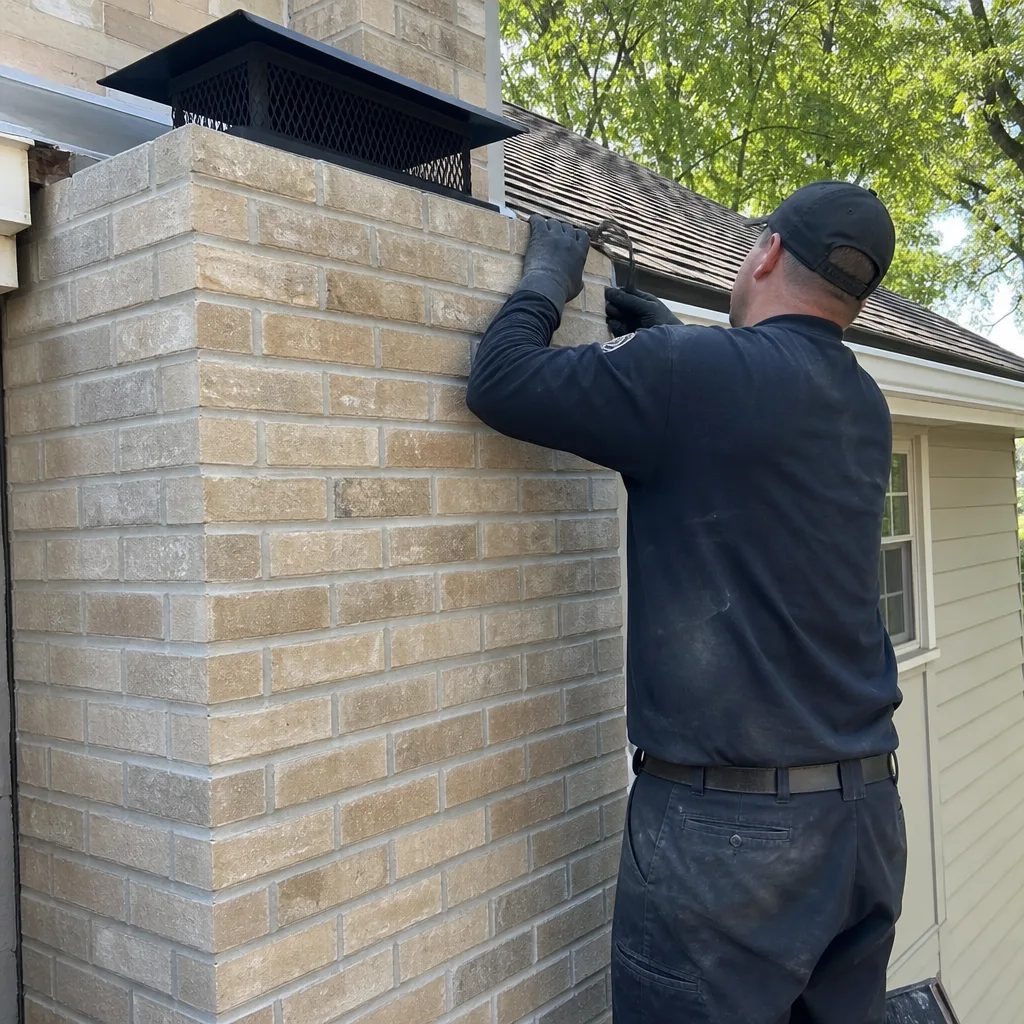
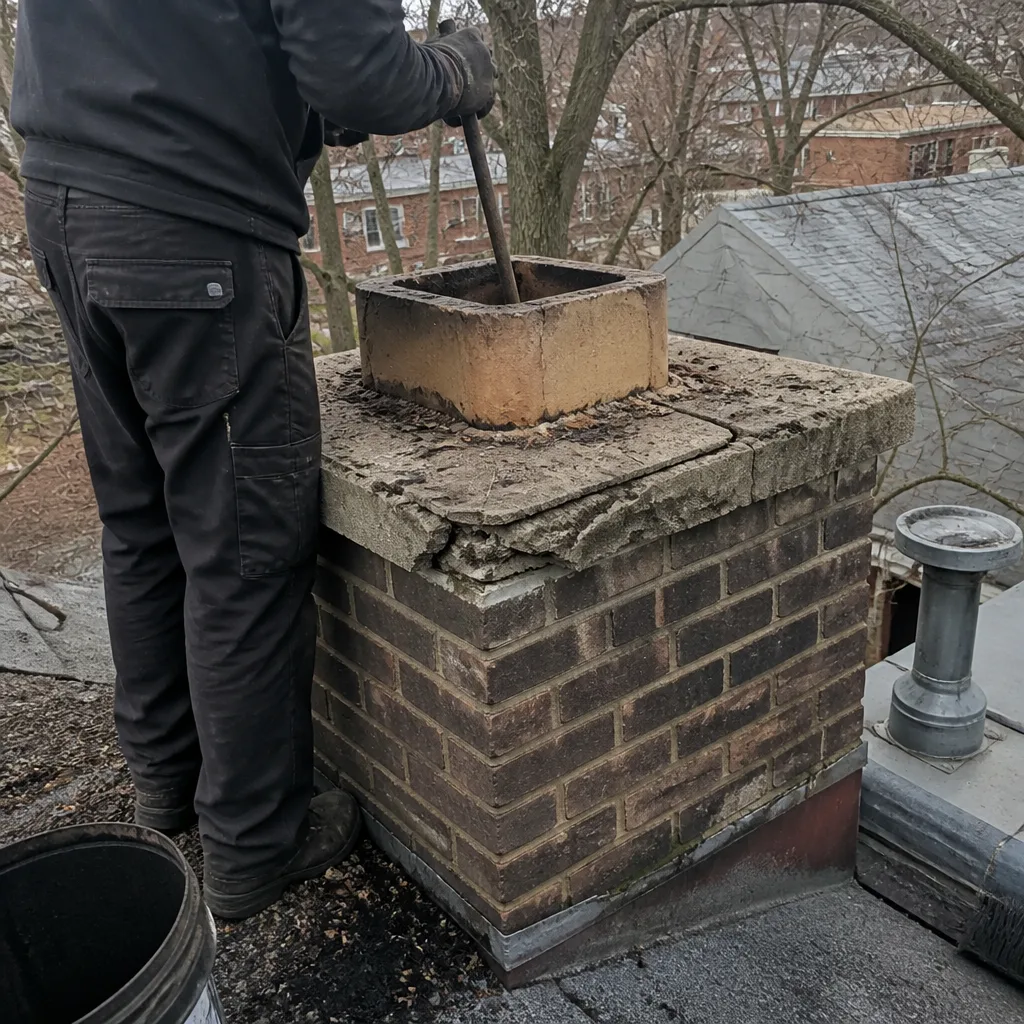
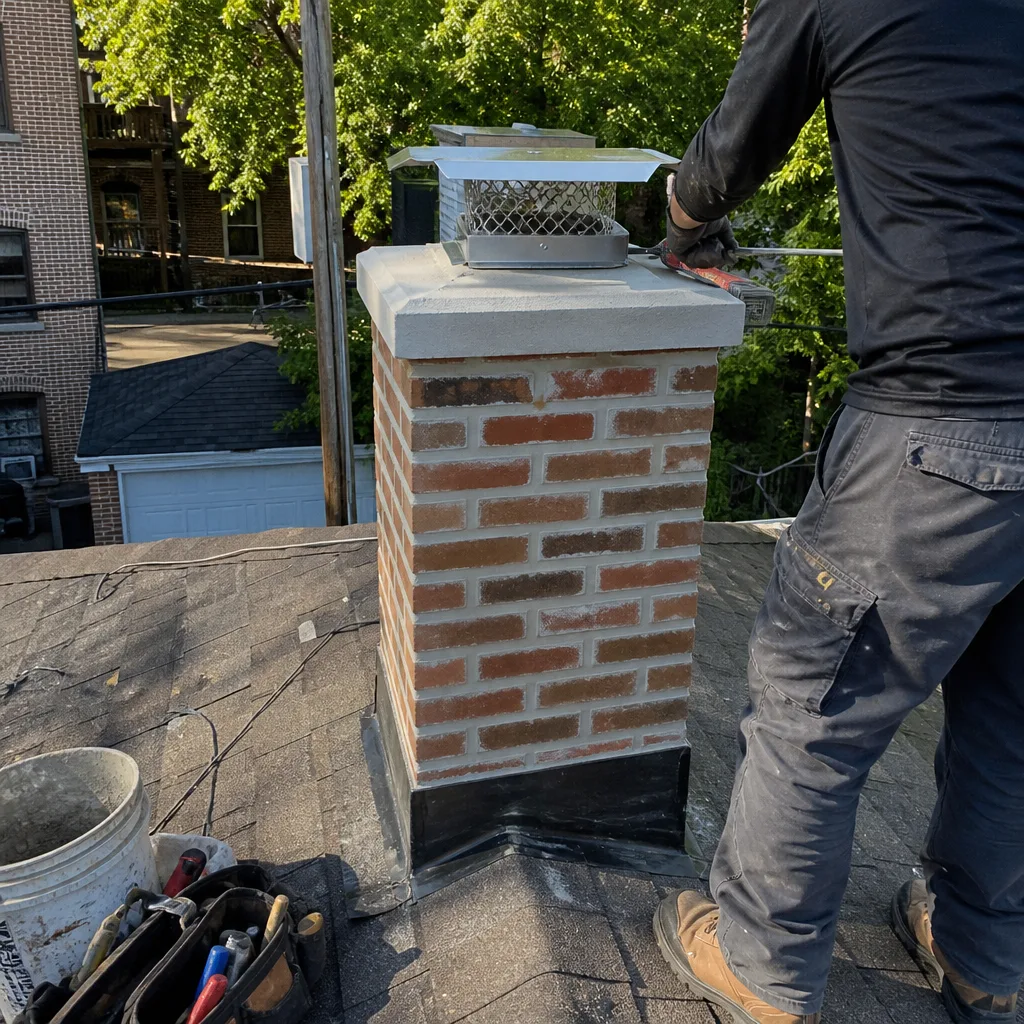
See the difference
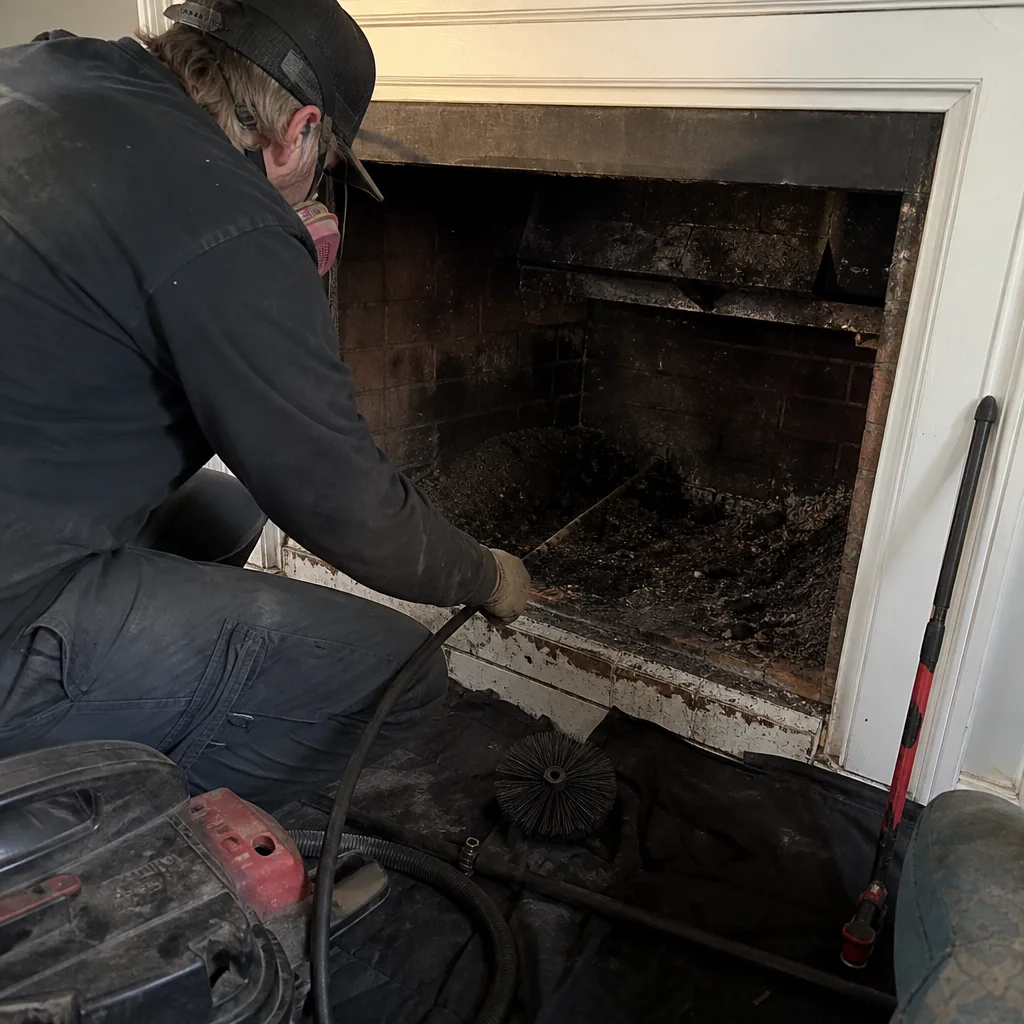 Before
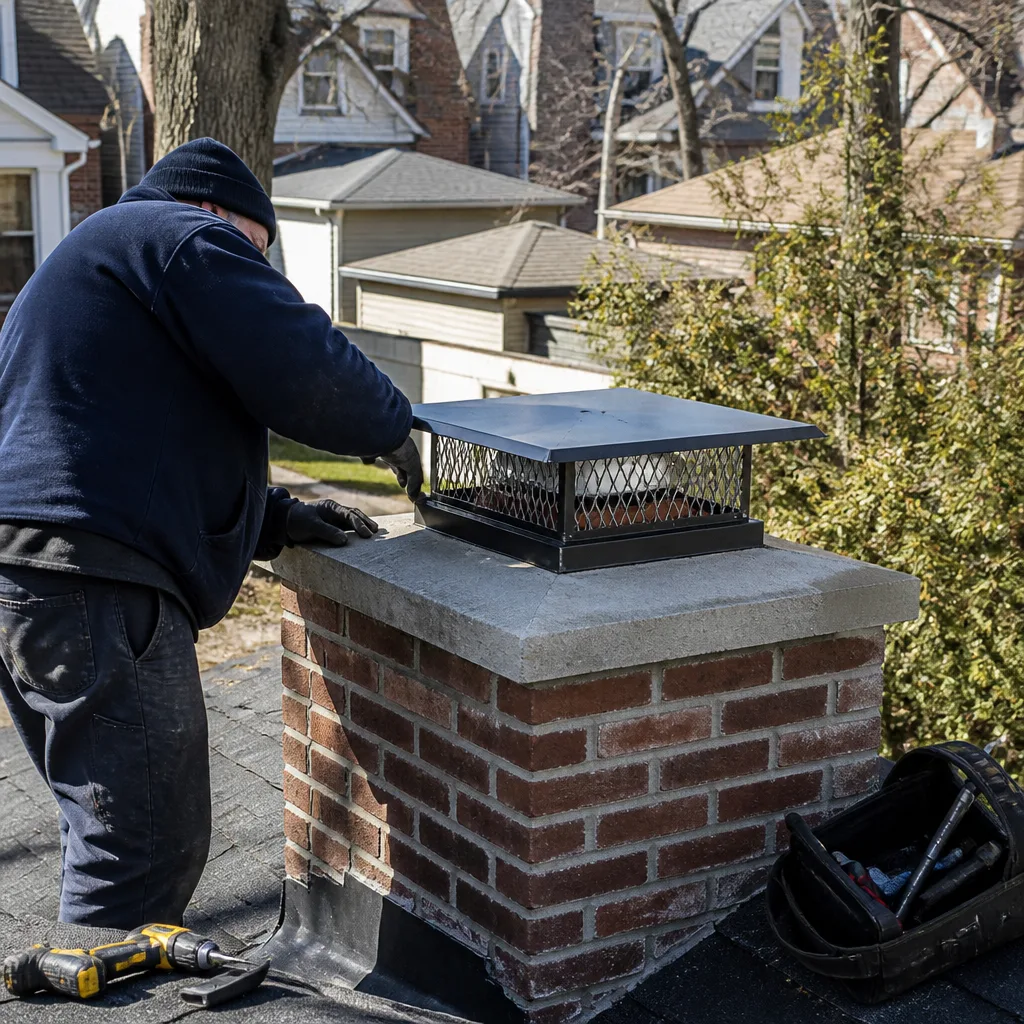 After
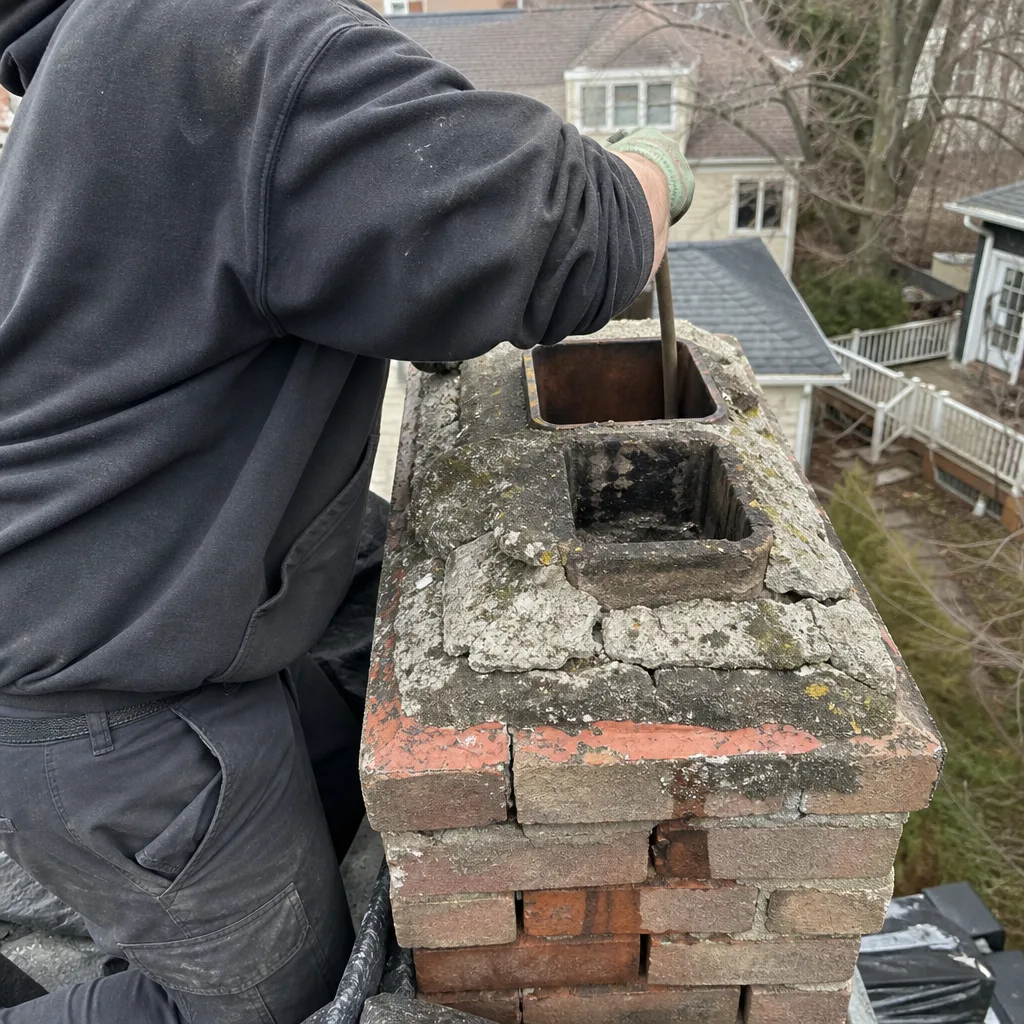 Before
 After
 Before
 After
Frequently Asked Questions
A standard chimney sweep and Level 1 inspection in Near North Side typically costs between $180 and $340, depending on the height of the chimney, the complexity of the roof access, and the degree of creosote buildup. Level 2 inspections with video scanning cost more and are appropriate after winter or before a home sale. Call (833) 589-7835 for a specific quote, and we will give you a number before any work begins.
The National Fire Protection Association recommends a sweep when creosote buildup reaches one-eighth inch, and for most regular burners in Near North Side, that works out to once a year at minimum. If you burn frequently from October through March, or if you burn softer woods like pine, you may need a mid-season check. The only way to know for certain is to inspect the flue and measure what is actually there.
You need a new liner when the camera inspection shows cracks, gaps, or deterioration that exposes the surrounding masonry to heat and flue gases. That is a factual, visible condition, not an argument. A proper sweep will show you the camera footage and let you see the crack yourself before recommending replacement. If a recommendation is not backed by visual evidence you can see with your own eyes, get a second opinion. If it is, you are looking at real damage, and a stainless liner from a professional chimney company is the standard fix.
Creosote builds up layer by layer, and at some point it becomes thick enough to ignite. A chimney fire burns hot and fast, often cracking the flue liner and, in severe cases, spreading to the surrounding structure. Even if a fire never happens, years of skipped sweeps allow water intrusion and masonry deterioration to continue unnoticed. The risk is not hypothetical in Near North Side, where moisture and freeze-thaw are already working against your masonry every single winter.
You can, but softwoods produce more creosote than hardwoods like oak and maple, and in dense urban air that creosote tends to form a stickier glaze. If you do burn softwood, budget for more frequent sweeps. Better practice in this climate is to burn seasoned hardwoods with moisture content under 20 percent and to have the flue checked more often if your burn rate is high.
Yes. Chimneys and dryer vents are the two leading household fire hazards involving accumulated particulates: creosote in the chimney and lint in the dryer vent. In Near North Side, where many homes have older vent runs and limited exterior access, lint buildup is a common and underreported problem. Combining dryer vent cleaning with your annual chimney sweep addresses both hazards in a single appointment, which is why we offer the two services together. Call (833) 589-7835 to schedule both.
The Bottom Line
Near North Side chimneys face a specific set of conditions: lake-effect moisture, relentless freeze-thaw cycles, dense urban particulate, and aging masonry that was never designed for modern heating patterns. A generic sweep checklist does not address these conditions. A proper maintenance plan includes annual sweeping with camera inspection, seasonal attention to crown and mortar health, specification-grade materials for repairs, and a willingness to look at the flue as a system rather than a pipe. The houses here are old, and the weather is aggressive, but the right maintenance cadence keeps a chimney safe and functional for decades. For The Complete Guide to Chimney Cleaning in Near North Side and answers about your specific chimney, call (833) 589-7835 for a free estimate and an honest diagnosis.
Written by the team at Sandstone Chimney Sweep, serving Near North Side since 2017. For more guides & resources, explore our blog.